
Hey everyone, Wallysson here.
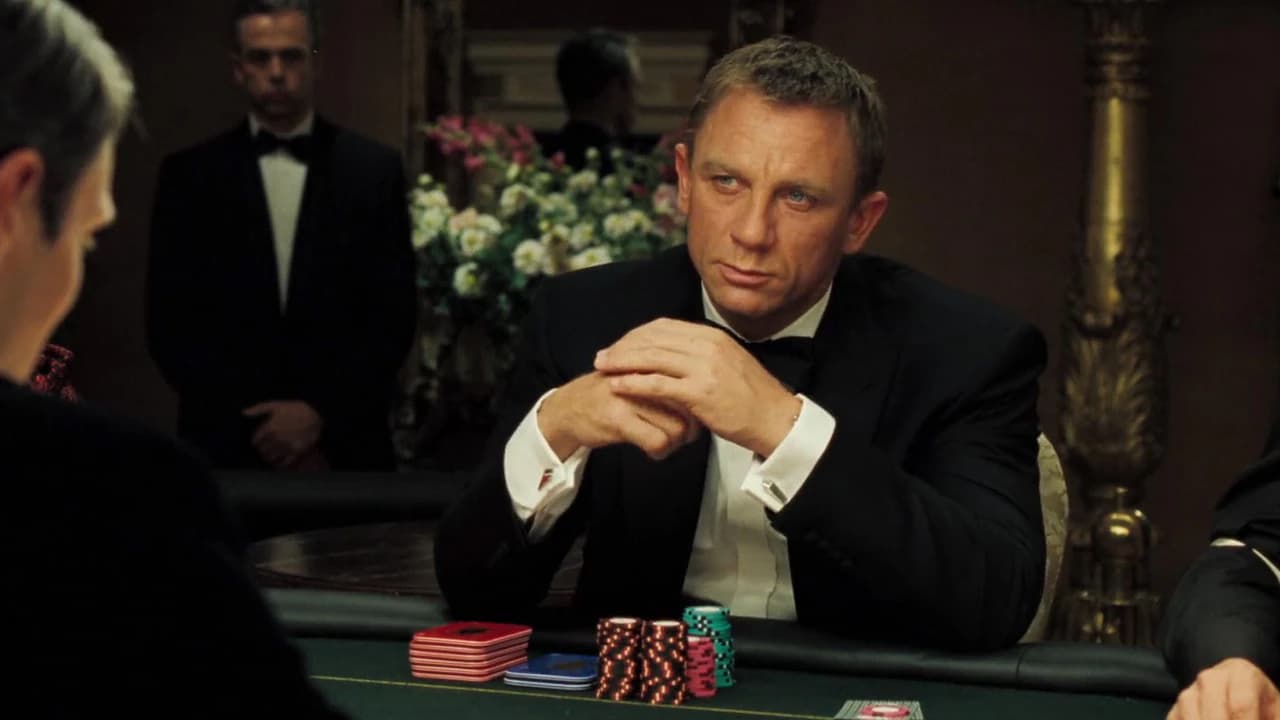
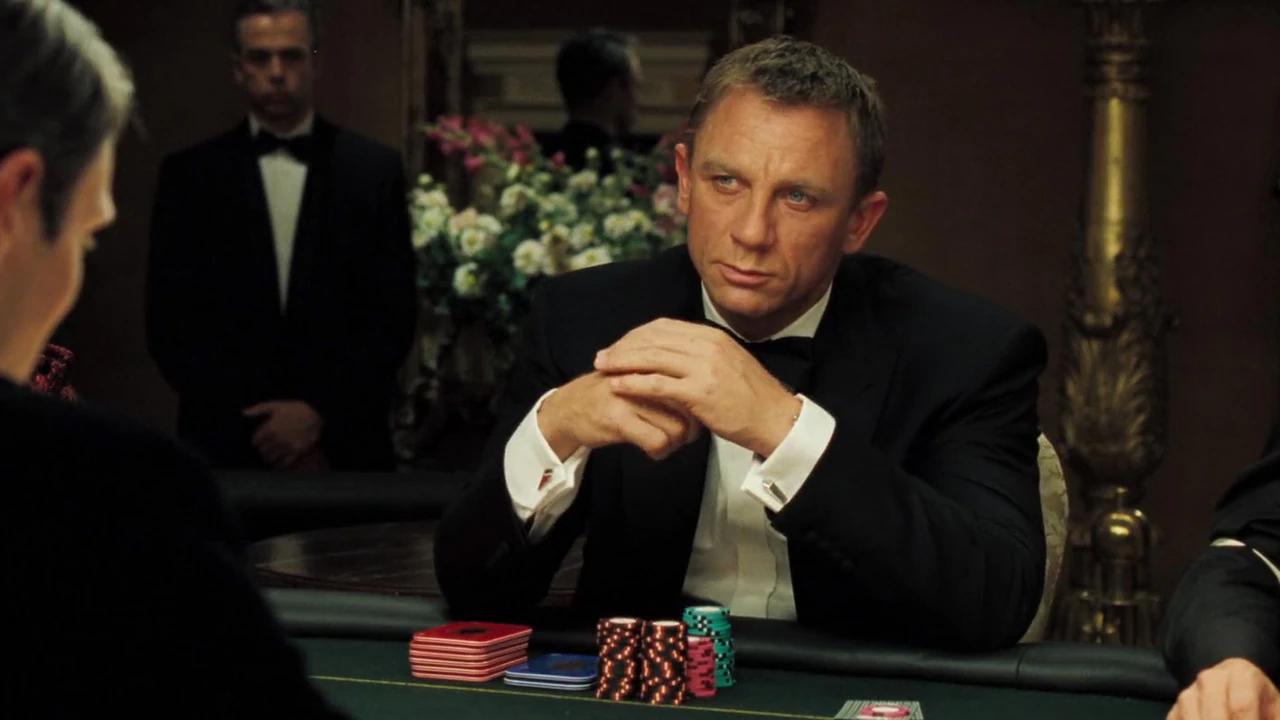
Round four. You open a hand that wins the game and you work hard to keep it off your face. Arm still, eyes dead, breathing under control. You are pleased with your poker face.
Three plays later you have to pick a line and you freeze on a silly question: is there still a Boss's Orders in your deck, or is it sitting in your Prizes?
And that changes what you do right now. If it is in the deck, you search for it and the game gets a lot easier, because it was exactly the card you needed this turn. If there is a chance it is in the Prizes, you have to build the line assuming it never shows up, and the game you had in your head becomes a different one.
And the worst part is that you checked. You did the first search, you saw what was there, and in that moment you knew.
Then you forgot.
Those two things are connected, and the explanation is simpler than it sounds.
Why hiding your expression erases your count
Have you ever tried to hold a number in your head while someone was talking to you? The number is gone. It is not a memory problem. Both things take up the same space, and that space is small.
That space has a name: working memory. It is what you are holding in your head right now, on purpose, and it disappears the second you stop holding it.
At the table it is almost everything that matters. How many cards are left in your deck. Which ones you have already seen and which could still be in the Prizes. What your line for the next two turns was. None of that is written down anywhere. It only exists in you.
Holding your expression takes up that same space.
This is the part nobody talks about. We think of expression as a face thing, something that either happens or does not. But deciding every second not to react is a task, and you keep tending to it the whole time that good hand is in front of you.
Two psychologists, Jane Richards and James Gross, tested this in 2000, in a study published in the Journal of Personality and Social Psychology. They showed a film to two groups. One group was told not to let any emotion show on their face. The other watched normally. Then they asked each person what they remembered of what they had seen.
The people who spent the film holding their expression remembered less.
A film is not a tournament, I know. But look at it this way: those people had nothing to do except watch, and hiding their reaction still cost them memory. At the table you are hiding your reaction and running a game at the same time.
Where this came from
I reread a text from TCMG's old site the other day, from October 2017.
The old site had really good stuff on it, and today none of it is anywhere you can find. That has bothered me for a while. People wrote well, for free, for a scene much smaller than today's, and nothing survived with their names on it.
So that is what TBT is: I take a text from over there, credit whoever wrote it, and update the game around it.
The first one is by Alberto Timoteo. He was a psychology student when he wrote it, and his bio on the site said exactly that: "Psychology student, aspiring Pokémon trainer. Been playing the cards since 2016."
And he was not writing self-help. There were people in the scene talking about psychology any old way, and that bothered him precisely because he was studying the field. The line he uses is: "Let's talk about science?"
The subject of his text is executive functions. That is the name psychology gives to a set of things your brain does to control and organize itself. Two of them matter here: holding your own reaction, and holding information.
Alberto says to train both. What nobody knew in 2017 is that both spend the same memory, so training one in the middle of a game gets in the way of the other.
And there is a part I am not leaving out. Alberto is an excellent programmer today, and he is the person who taught me a lot about programming and about career. His text died along with the domain. Now it comes back on a site I built.
Thank you, Alberto.
Your face already lies on its own
Up to here the conversation was about the price you pay to hide your expression. Now the question that matters: does hiding work?
It does not, and this is where it hurts.
Alberto uses poker as his example of control, that player who makes the same face with a pair of 2s and with a royal straight flush. He got the example right, and science went further than he imagined: the professional's face does not just hide, it deceives.
In 2013, in Psychological Science, Michael Slepian and colleagues showed clips of professional poker players to ordinary people and asked them to guess who had a good hand. The people who saw the arm movement guessed above chance. The people who saw only the face guessed worse than if they had flipped a coin.
Worse than a coin flip. Looking at a professional's face actively hurts whoever is trying to read.
And if you think you are good at reading people, sit down. In 2006, Charles Bond and Bella DePaulo pooled 206 studies, with 24,483 people trying to tell truth from lies. The average accuracy was 54%. Flipping a coin would get you 50%.
There is a worse detail in that same work: people who are more motivated to look trustworthy tend to look more suspicious. Working hard to look calm gives away more than not working at all.
Nobody is reading your soul at the local weekly. Seriously, nobody.
Your body does give you away, and it gives you away exactly where you never trained. The hand that goes to the deck too fast. The half-second pause before picking up one specific card. The shoulder that drops after you saw what you needed to see.
And that is where Alberto's practical tip becomes the most useful thing in his text. He says to build an end-of-turn routine and repeat it the same way every time: turn is over, cards on the table, arms crossed, watch your opponent play.
A routine is a habit, and habits do not cost attention. Keeping a straight face is effort, and effort costs. And if you do the same thing on the hand that wins and the hand that loses, there is nothing to read on your face anyway.
That same 2000 study found a better way out than hiding. The group told to reinterpret what they were watching, instead of holding their face, lost no memory at all. At the table that means: instead of holding back the excitement of the winning hand, remember that it has not won yet. Your opponent still gets to play, there are still Prizes to take. And that is true about the game, and the truth takes no effort to hold.
For Saturday: pick an end-of-turn sequence and repeat it every round, winning or losing. And give up on controlling your face, because it is not your face giving you away.
The prize check is where memory pays off most
If your memory is the resource, the rest of this article is about spending it in the right place.
And here it is worth correcting a common way of doing it wrong: trying to memorize all 60 cards of your own deck and eliminating by exclusion. There is no time for that, and it is not the most useful thing.
The good way is *searching according to the matchup*. Before the game you already know which cards decide that specific pairing, and there are only a few. Against a deck you only beat by dragging the attacker out, what matters is where your Boss's Orders** are. Against a deck faster than yours, what matters is the evolution line that keeps you alive.
So you look for those, not for all of them. Key cards first, and you accept not knowing the rest.
And you have 45 seconds for it.
That number is new, from January of this year. The rulebook started publishing a reference time for each action, and the first deck search of the game, the one at the start, gets 45 seconds. Thinking before you play a card gets 10.
It is not there for you to burn all 45 every time. The same rule warns that anyone trying to use up every second allowed on every action is subject to a penalty for stalling, which is dragging things out on purpose to gain time or to run the round clock down. The number exists so the judge knows what is reasonable, not so you can lean on it.
For Saturday: before the game, decide which three or four cards decide that matchup. On the first search, you look for those.
What you do not have to memorize, because you can ask
This is the part most people leave on the table, and it is written in the rulebook.
There is a list of things that are public information, and your opponent is required to answer you. How many cards they have in hand. How many are left in their deck. How many Prizes each of you has left. How much damage is on each Pokémon in play. Whether they already used that turn's Ability. Which pile any card that has already appeared is in.
The contents of their deck is private information, and that you have no right to know. The number of cards is public, and that one you do.
So part of what you are trying to memorize, you can simply ask out loud. "How many cards in your hand?" is a legal question, and they have to answer. If they refuse, you call a judge instead of sitting there suspicious in silence.
And taking notes is allowed. The sheet has to be completely blank at the start of each match, you cannot use codes or abbreviations, because a judge can ask to read it mid-game, and you cannot look at a sheet from a previous round. Other than that, write whatever you want.
Turn trackers are allowed too, and the rule is explicit about it: they do not count as pre-written material.
For Saturday: whatever you can ask, ask. Every piece of information you confirm out loud is one thing your head does not have to hold anymore.
To wrap up
I really enjoyed writing this. Almost every card Alberto mentions in 2017 has already left Standard, and his advice is still standing nine years later. Finding that by rereading a text almost nobody can access anymore is exactly why this series exists.
His text points to an article by another writer from over there, André Porto, called "Por Trás das 60 Cartas: Poker e TCG" (Behind the 60 Cards: Poker and TCG). After writing this, I really want to read what he had to say about poker in 2017. That is the next TBT.
I hope you enjoyed it. If you did, I will bring more and study it more deeply, because there is plenty in this area worth pulling to the table.
And send me a message. An article idea, a text from the old site you remember and want back, or what you think of the site. I am happy to hear what you are thinking.
References
The original text
"A Psicologia do Pokemon TCG: Como saber sobre Funções Executivas podem me tornar um jogador melhor?", by Alberto Timoteo, published on October 19, 2017 on pokemontcgmg.com.br. The only surviving copy is on the Internet Archive.
The studies cited
Richards, J. M., & Gross, J. J. (2000). Emotion regulation and memory: the cognitive costs of keeping one's cool. Journal of Personality and Social Psychology, 79(3), 410-424. This is the film and memory one.
Slepian, M. L., Young, S. G., Rutchick, A. M., & Ambady, N. (2013). Quality of professional players' poker hands is perceived accurately from arm motions. Psychological Science, 24(11), 2335-2338. This is the arm and face one.
Bond, C. F., & DePaulo, B. M. (2006). Accuracy of deception judgments. Personality and Social Psychology Review, 10(3), 214-234. This is the 54% one.
Diamond, A. (2013). Executive functions. Annual Review of Psychology, 64, 135-168. This is the reference Alberto himself used in 2017.
None of the first three was run on card game players. I brought the reasoning to the table, and that part is mine.
The rules
Play! Pokémon TCG Tournament Handbook, revision of September 1, 2026. The reference times are in section 7.4.5, note-taking in 7.4.6, turn trackers in 7.4.6.1, and the split between public and private information in 6.3.
The card numbers
The 155 tournament lists published here on the site, from the last 90 days, read on September 9, 2026. The average copy count at this year's Worlds came from the Limitless TCG compilation. These numbers age fast: if you are reading this much later, the format has already changed.