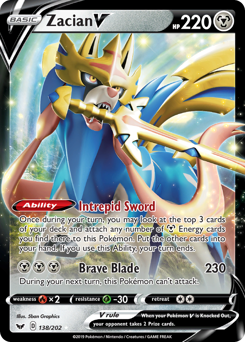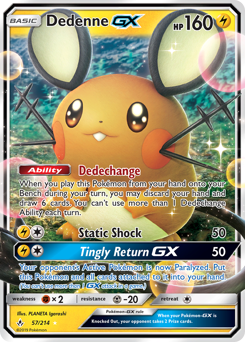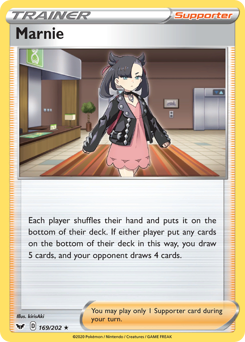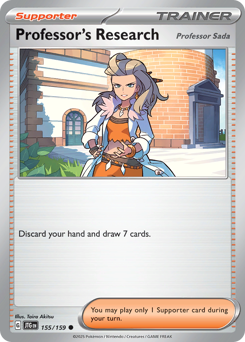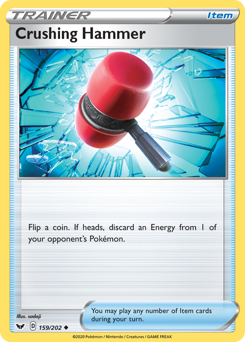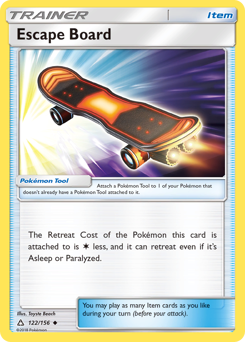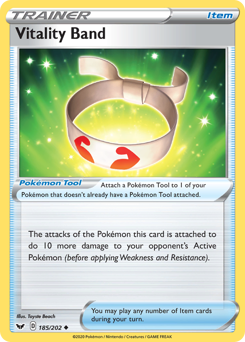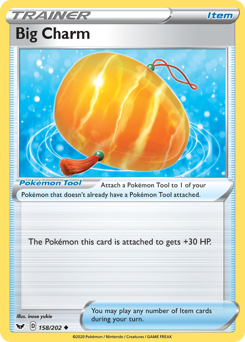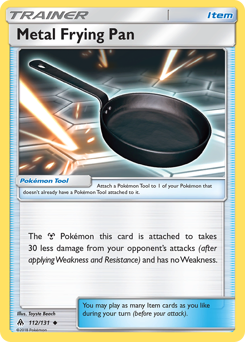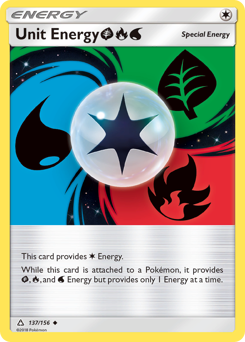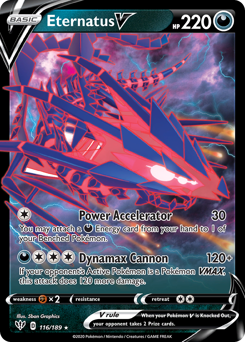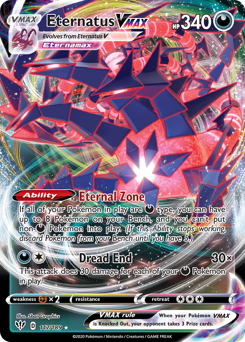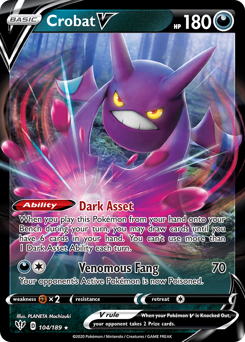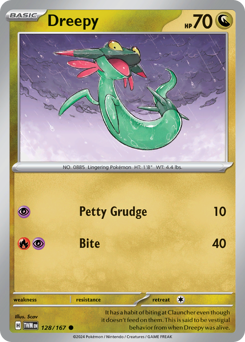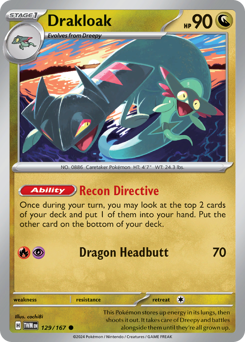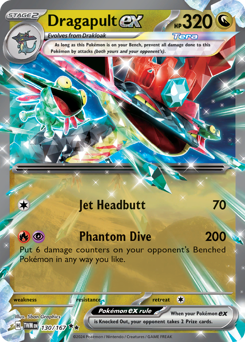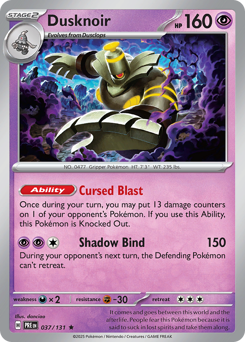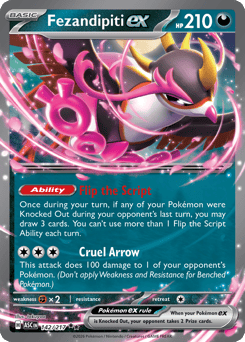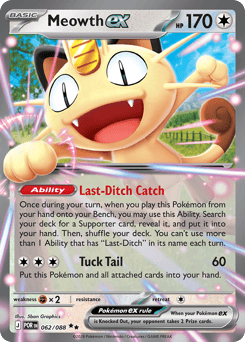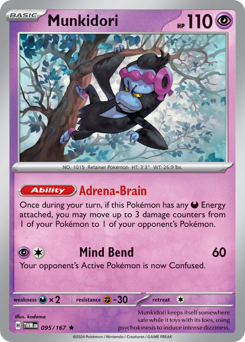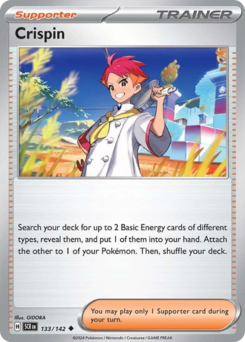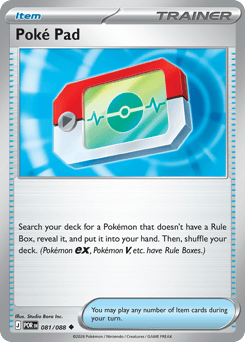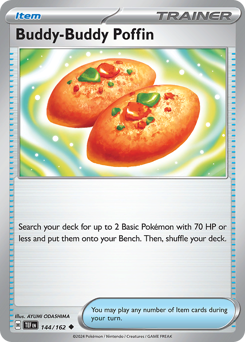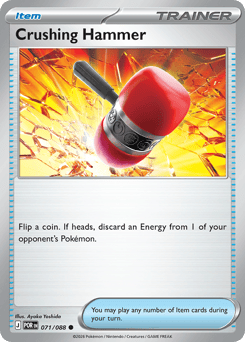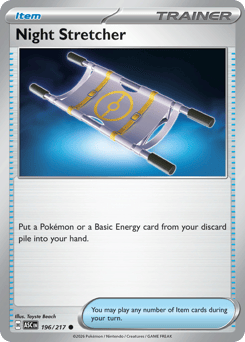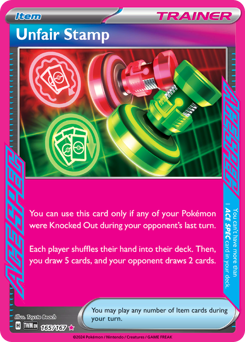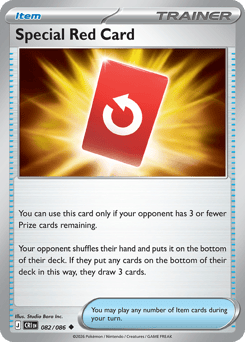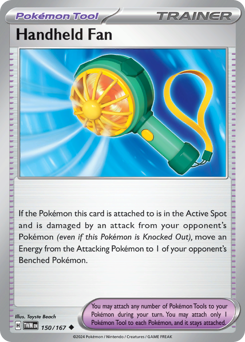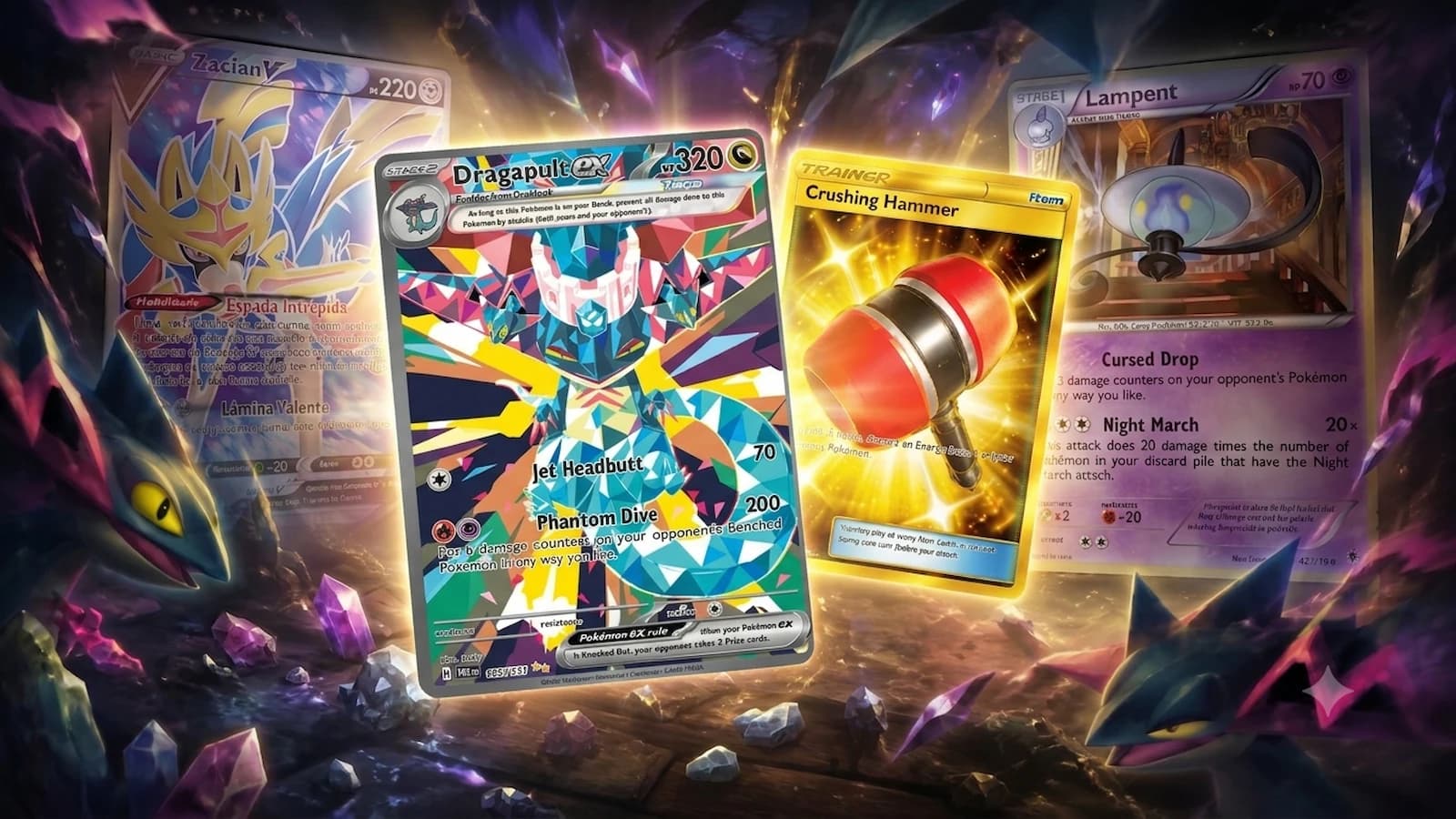
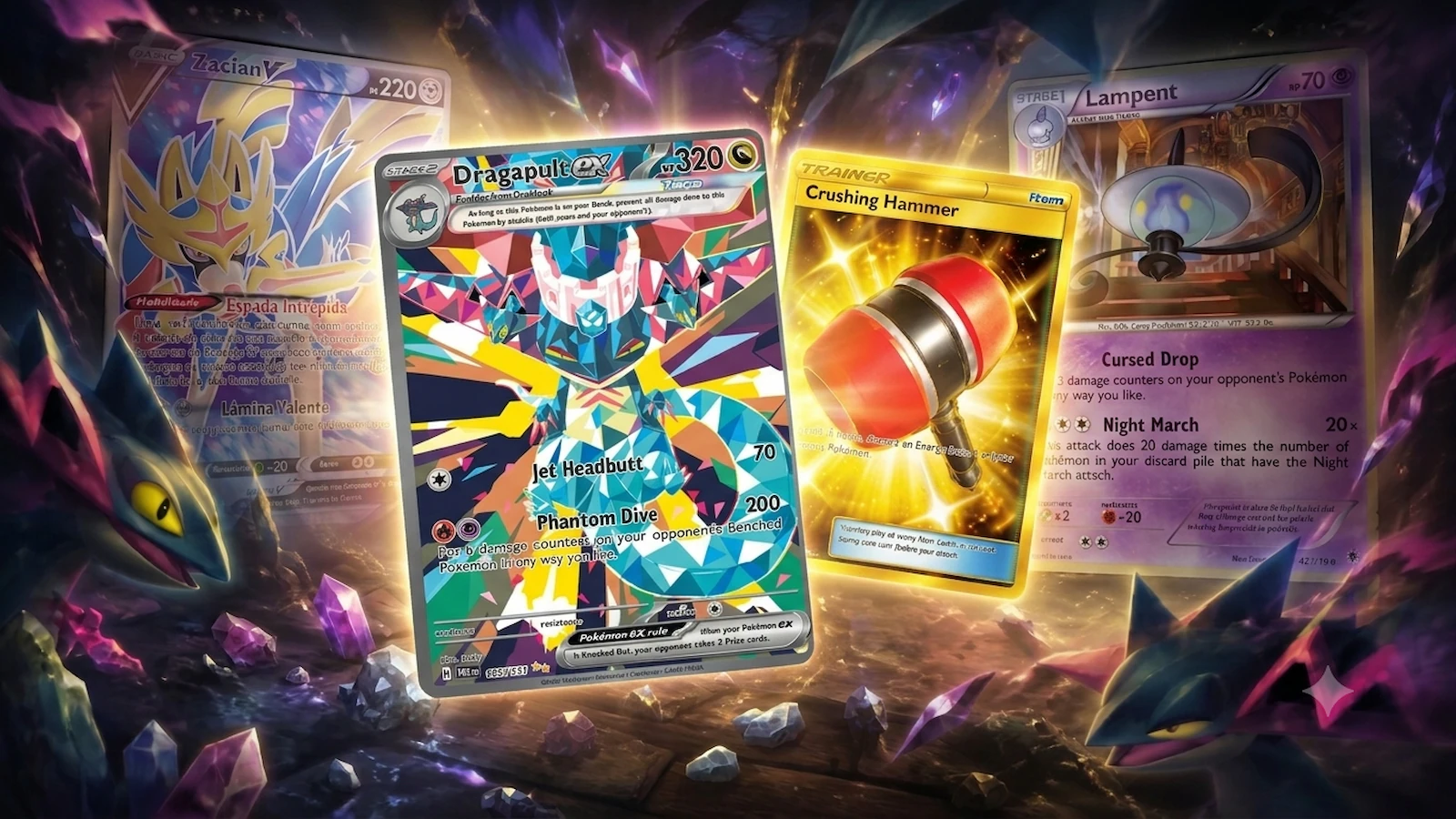
If you've played a relevant Pokémon TCG tournament in the last few months, you've surely heard the roll of the most hated die in the format: the flip of the . And the funny part is that it isn't coming from the hand of a Control, Stall, or Mill deck. It's coming from , one of the most consistent and stable decks in the current metagame, which trades a consistency Item for an Item of pure negative interaction — and still remains the winningest deck of the season.
This is no coincidence, and it isn't exactly new either. It's a pattern that repeats throughout the history of the TCG whenever a specific set of conditions appears: a fast, consistent deck with some Energy dependence finds a window where playing control cards stops being a "waste of a slot" and becomes pure profit. Let's understand why this happens, how it has happened before, and why Dragapult ex in 2026 is perhaps the clearest example of it to date.
What we mean by "control cards"
First things first, it's worth aligning the vocabulary. When we talk about "control cards" in the TCG, we usually mean Trainers (Items, Supporters, Stadiums) and even Pokémon whose main effect is negative for the opponent, rather than positive for you: discarding the opponent's Energy, locking Abilities, forcing hand discards, trapping the opponent in the Active, or denying the use of Items. Cards like:
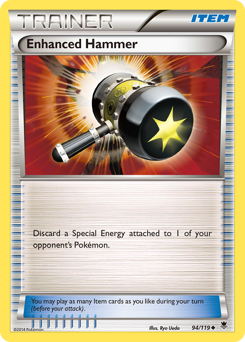
and (Energy discard)
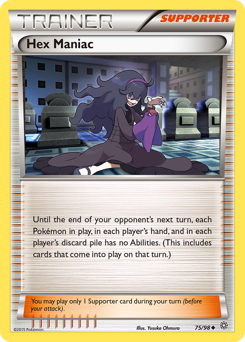
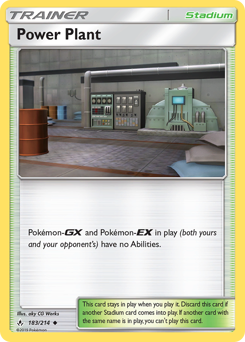
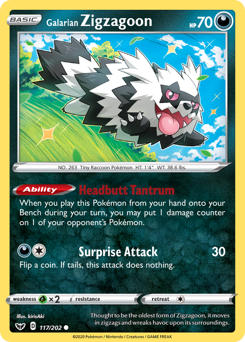
and its Initialization Ability (locks the Abilities of Pokémon with a Rule Box)
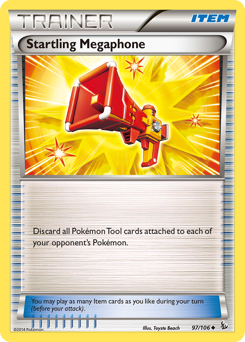
and (Tool/Stadium removal)
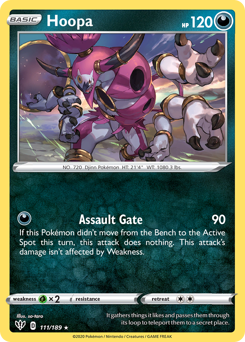
, which moves an Energy attached to the opponent onto one of the Pokémon on their Bench
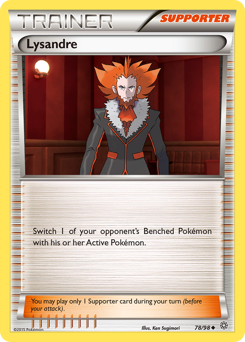
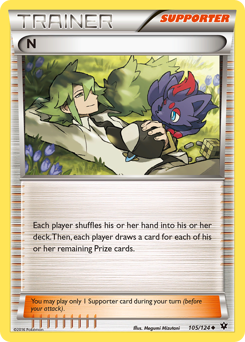
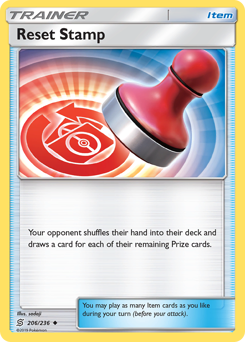
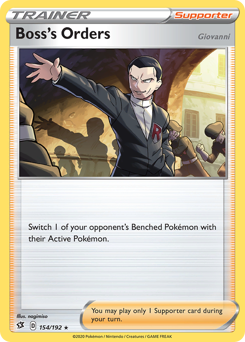
, and other ways of shuffling the opponent's hand
Historically, this kind of card lives in Control or anti-meta decks — archetypes like Stall, Ability-lock decks (like itself), or lists built to grind the game out and win on tempo rather than in the prize race. The logic is simple: if your deck doesn't have strong offensive pressure, you need to steal tempo from the opponent somehow, and the best way to do that is by disrupting their setup.
What got strange — and brilliant at the same time — was when aggressive decks, focused on taking prizes as fast as possible, started realizing that these same cards can work for them.
Why would an aggressive deck play a Control card?
The short answer is: when the card's opportunity cost drops to nearly zero.
Every deck running 60 cards is making a budgeting choice. Each Crushing Hammer slot is a slot that isn't an Energy, a Pokémon, or a consistency Trainer. In other decks, this was usually prohibitive: playing a Crushing Hammer meant giving up a card that helped you execute your own game plan.
But there's a very specific scenario where that equation changes:
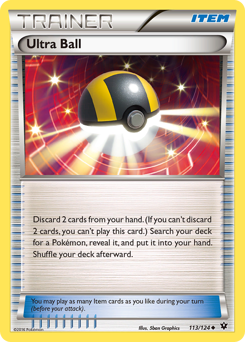
The deck is already consistent enough without needing more "setup cards". When the consistency base (Ultra Ball, search cards, draw Supporters) is already robust enough, there's budget room to spare — and that room can become interaction.
The format is one where every energization matters. In formats where the game usually ends in a few turns, each Energy attachment a player makes carries disproportionate weight on the match's outcome. Taking an Energy off the opponent in that context is almost equivalent to "stealing a whole turn" from them.
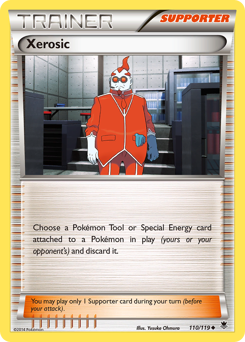
It's exactly this combination that made a Dragapult ex staple in 2026 — and that had already led a whole family of Energy-removal cards (Hammers, Xerosic, Team Flare Grunt) to show up inside aggressive decks at other points in the game's history.
The precedents: this has happened before
Night March (2015–2016): as a two-sided answer
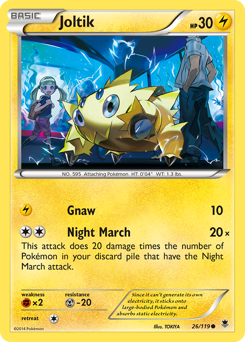
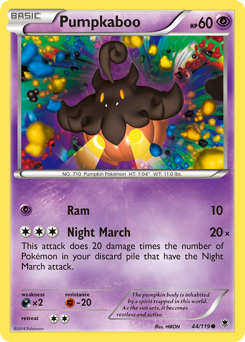
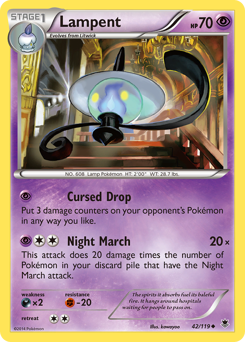
One of the first big examples of this phenomenon — albeit from a slightly different angle — was Night March itself, the symbol of extreme aggression in the Black & White/XY era. , , and gained damage as Night March Pokémon piled up in the discard, and the deck relied on — usually just 4 copies in the entire deck — to put those cheap attackers into play. That extreme dependence on a scarce resource made it hypersensitive to any form of Energy removal.
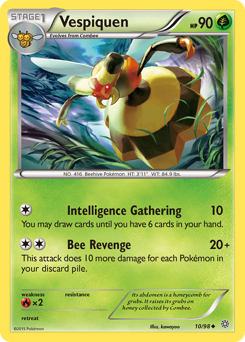
The interesting thing is that this effect showed up on both sides of the table. On one hand, the rest of the format started carrying and specifically to lock down the Night March engine. On the other, lists of Night March/Vespiquen itself, like Andrew Wamboldt's and Nick Robinson's, included their own copy of — a hyper-offensive deck saving room for a control card, in an attempt to lock down the mirror's setup or that of other equally Energy-dependent decks like Vespiquen and Trevenant. This shows the other half of the reasoning: when a deck critically depends on just a few Energy attachments to function, it becomes hypersensitive to this kind of interaction — which incentivizes the entire metagame, including the aggressive deck itself, to carry Hammers.
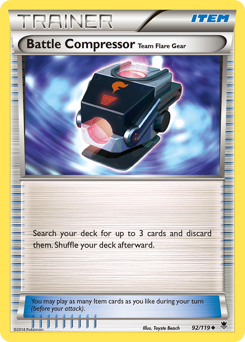
Hammers weren't the only Energy-interaction tools available back then — and that's worth highlighting, because it shows the phenomenon was never about one specific card, but about an entire category of effects. In the XY era, the Phantom Forces set introduced a batch of Team Flare cards designed specifically around manipulating the opponent's Energy: , an Item that discards an Energy attached to the opponent's Active Pokémon, and , a Supporter that discards both a Tool and a Special Energy from the opponent's Active in a single play. Bulbapedia itself notes that the era's "Grunt cards" formed a recurring pattern of cards manipulating the opponent's Energy, with Team Flare Grunt itself opening that path.