
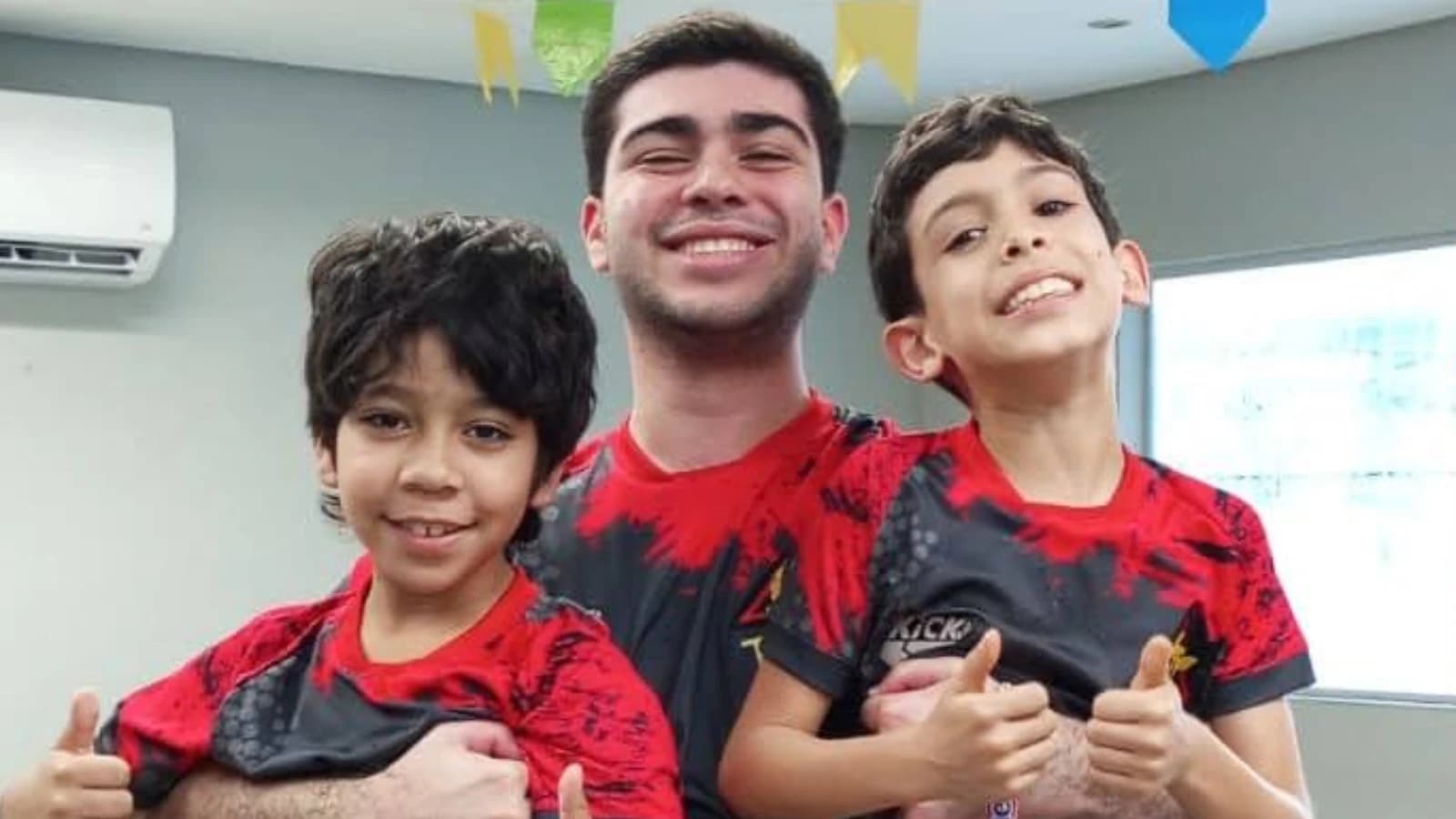
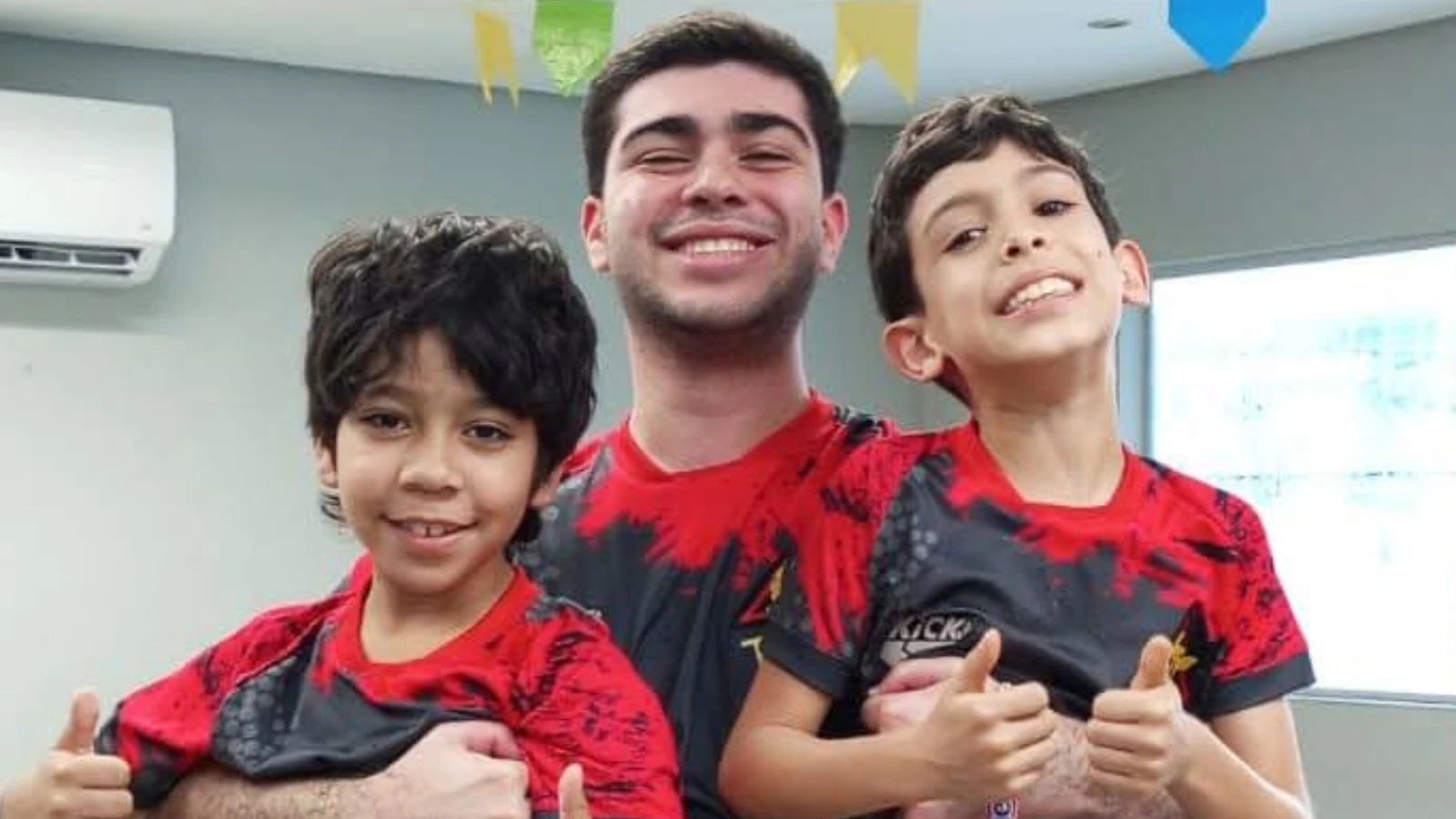
This article is about kids who play Pokémon TCG.
Not just kids who show up at the shop, sit down at the table, and play a match. But kids who are stepping into competitive play, who really love the game, who are starting to understand deck, result, defeat, training, friendship, frustration, and everything that comes with it.
It's also about the moms and dads who follow this closely. Sometimes driving them to the shop, sometimes waiting for the tournament to end, sometimes without understanding all the cards, but understanding that this matters to their kid.
And it's also about those who have walked this path before.
A player who was once a kid in the game, kept playing, became a Master, became a reference in Minas Gerais, and looking from the outside, I have little doubt that Pokémon TCG shaped a lot of who he is today.
I started thinking about this looking a little at my own story.
My mom always supported me in everything she could. I can never say there was a lack of support. But in my hometown, there was no shop with an active Pokémon TCG scene. No league, no tournament, no people gathering to play every week.
She liked that I played. She saw me playing. But Pokémon TCG never became something we shared.
And I keep thinking about this sometimes.
When I was little, I never forgot her playing Mario Kart with me. It was just a video game match, but it's a memory I still carry today.
So imagine if there had been a shop nearby, a tournament, a place where she could take me, watch, ask about the deck, understand why I was sad after a loss or happy after a small win.
Maybe we would have lived more of that side together. Maybe not. There's no way to know.
But when I see a mom or a dad today following their child at a league, I think about this. Because to someone on the outside, it may seem small, but for a kid, that might stay with them for a very long time.
And Pokémon TCG has many layers.
There's the game itself: reading cards, doing the math, thinking, adjusting, and trying again.
This isn't just an impression from those who play. A study on collectible card games treats this kind of game as a learning tool and points out that they can stimulate creativity, cognition, and logical reasoning, as well as help players organize knowledge and develop skills that aren't always easy to teach in the classroom.[1]
There's also the part about learning through play. A review on game-based learning in early childhood education found positive effects on areas like cognitive, social, and emotional development, motivation, and engagement.[2]
It doesn't mean Pokémon TCG replaces school, family, or anything else. But it helps show that a game can also be a space where a child learns, practices, and grows.
And there's the social side, which for me might be one of the strongest.
A kid has to sit across from someone. Has to talk. Has to explain a play. Has to listen. Has to win without trampling the other person, and lose without giving up on everything.
Studies on board games and emotional competences also look at this kind of experience as a social and motivating environment, with the potential to work on interaction and emotions during play.[3]
But this article isn't about turning Pokémon TCG into a thesis.
It's about listening to people.
To write this article, I wanted to hear three sides of this story: the kids who are living the game now, the moms who follow it closely, and someone who started young, kept playing, and today has become a reference in Minas Gerais.
The idea is to understand what each of them sees in Pokémon TCG: what makes a kid want to keep going, what moms notice from the outside, and what stays in someone's life after so many years playing.
From here on, the idea is to let them tell it.
The game through Guilherme and Mateus' eyes
Before listening to the adults, I wanted to start with the kids.
Because it's easy for an adult to try to explain what the game means to them. Harder, and more important, is to let them speak for themselves.
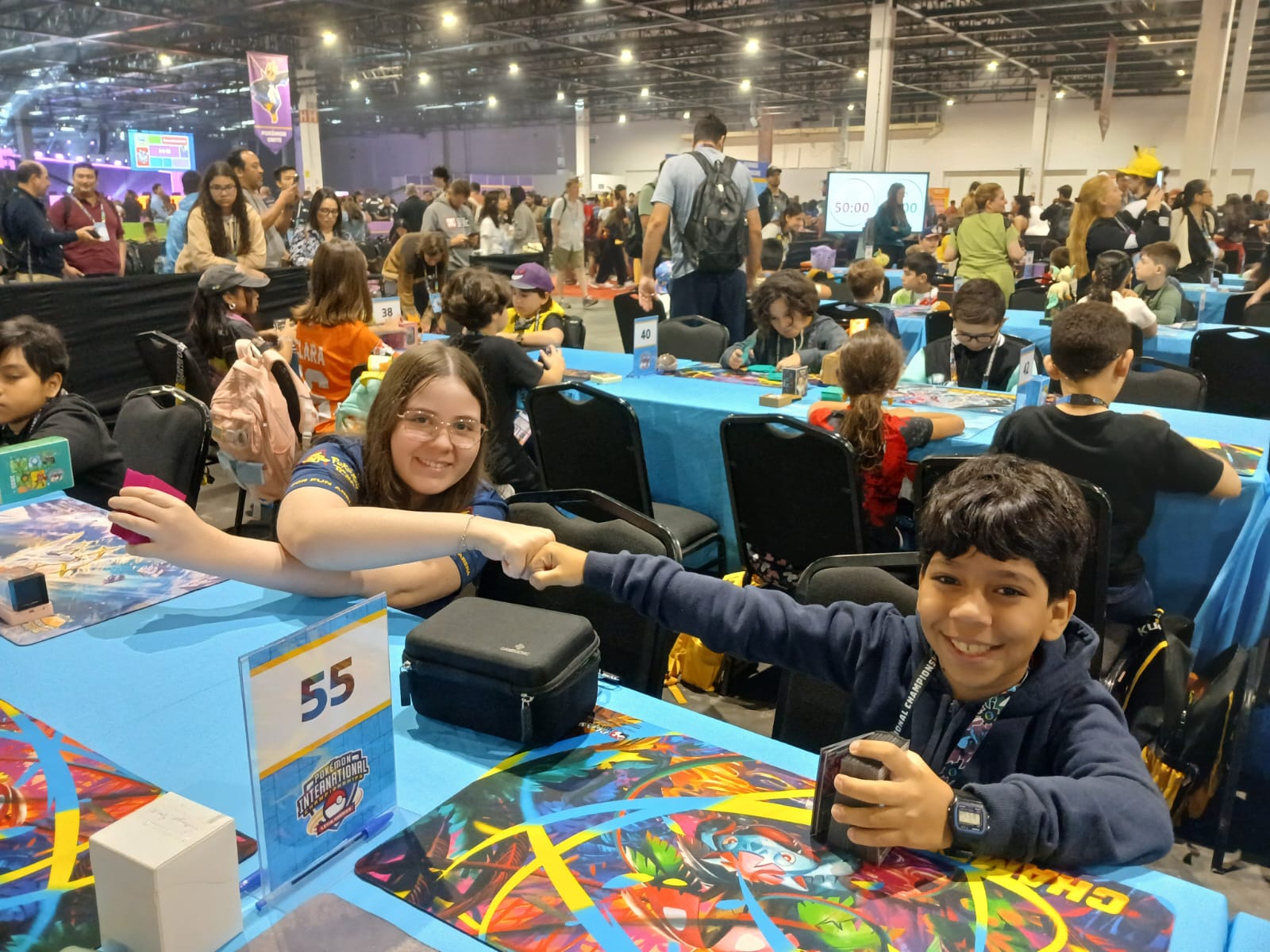
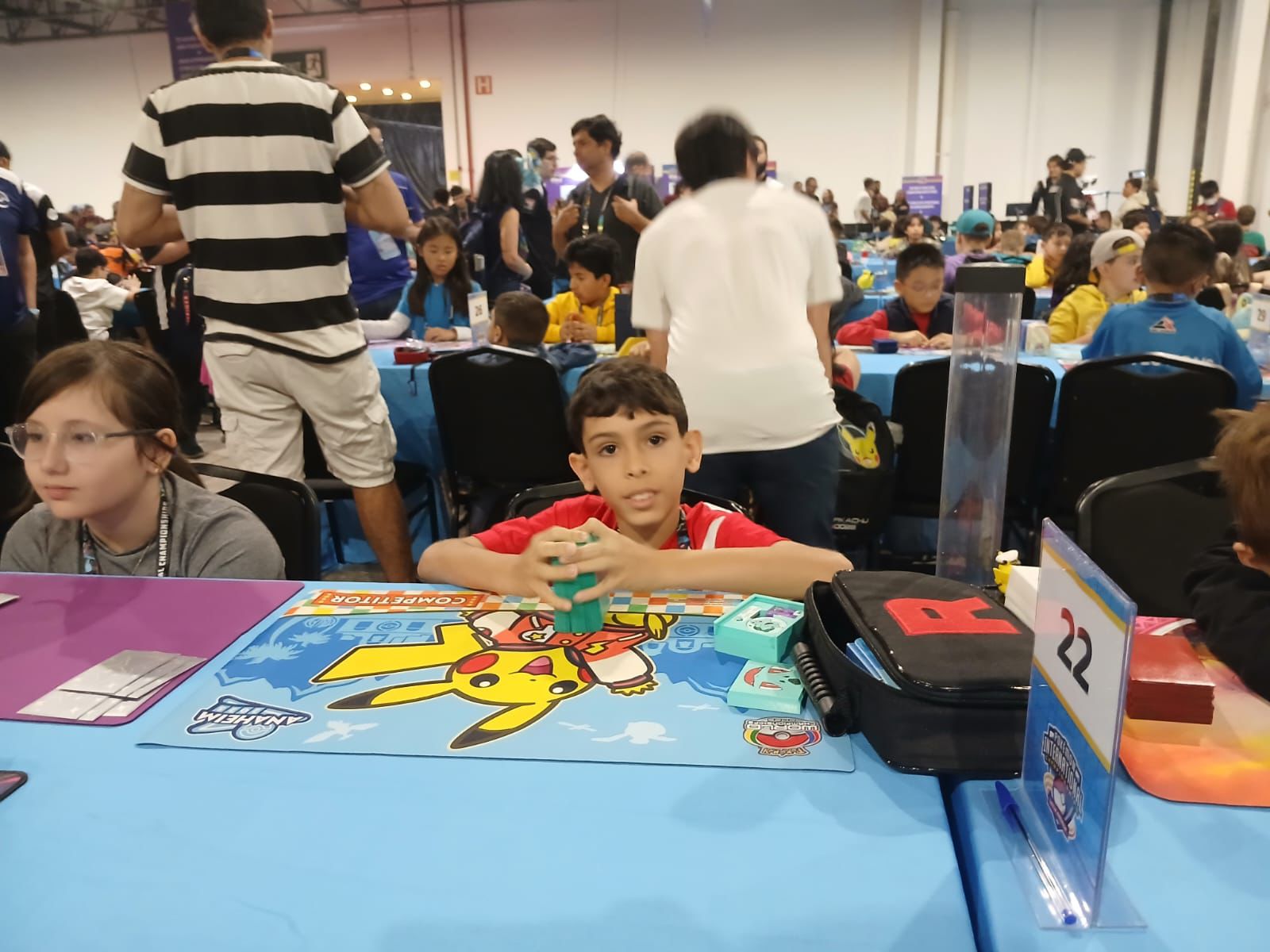
I talked to Guilherme, 10 years old, and Mateus, 11, two kids who already live Pokémon TCG up close and are starting to understand the game beyond the cards: the desire to improve, the relationship with other people, defeat, the help from those who know more, and the feeling of being part of that environment.
To start, tell me a little about yourself: your name, your age, and how long have you been playing Pokémon TCG?
Guilherme:
My name is Guilherme, I'm 10 years old, and I started playing Pokémon 3 years ago, when I was 7. Before that, I collected the cards because I liked them, and also because they were popular at school.
Mateus:
Hi, I'm Mateus, I'm 11 years old, and I've been playing Pokémon TCG for two years. I started playing in November 2023.
How did Pokémon TCG come into your life? Was it through a friend, family, the show, the video game, a shop, or another way?
Guilherme:
I started playing Pokémon TCG because, at my school, lots of people collected cards. So I started collecting too. Then I got the urge to play because my mom saw that a Brazilian player had finished first in Japan.
Mateus:
I started with Yu-Gi-Oh! Back when I was still playing chess, I went to a shop to enter a tournament. Except, at that shop, I discovered there was a game based on a cartoon I liked.
Later, since the people at my school didn't play Yu-Gi-Oh! and everyone played Pokémon, I switched to Pokémon. That's how I got into Pokémon TCG.
When you play Pokémon TCG, what makes you want to keep playing?
Guilherme:
I keep playing because I find it really fun to think about how to play and what I can do to improve, because it's a game of strategy and reasoning.
Mateus:
I don't play out of obligation, or to win tournaments or get famous. I play just for fun.
Do you feel that Pokémon TCG helped you make friends in a way that maybe wouldn't have happened outside the game? How did that happen?
Guilherme:
Yes, because I was really shy, and I managed to face new people and make friends over time.
Mateus:
Yes, because if I didn't play Pokémon, I wouldn't have met many people, like Isabela, Guilherme, Marins, and Álvaro — they're all my close friends.
Without Pokémon TCG, I wouldn't have met them, because I'd never seen any of them before I started playing. The first time I saw them was at UG Cardshop, when I went to test my first deck.
When you lose an important match, what do you feel first? After some time passes, can you think about what you learned from that defeat?
Guilherme:
The first thing I think about is what I could have done to win. After matches, I learn a lot and even ask the people I played against how I could improve. When I lose, I get sad, because I feel I could have won. Sometimes I didn't make the right play because I didn't know what I should have done at that moment.
Mateus:
When I lose an important match, at first I get a little frustrated with myself. But then I see where I went wrong and what I could have done to win the match.
For example, there was a match I played a long time ago against Guilherme. He was playing a deck, and I was playing a deck. I made a wrong play that cost me the game. That's why I got a little frustrated, but later I realized that, if I hadn't done that, I could have won.
When someone more experienced helps you in the game, how do you feel? Does it make you want to keep playing more?
Guilherme:
I really like it when someone teaches me, and it makes me want to play more. I think it's really cool, because each time I learn more against other decks.
Mateus:
When someone more experienced helps me, I feel that one day I can be as good as them. It motivates me to train and play as much as they trained and played, so I can improve and reach their level.
Did Pokémon bring you closer to someone in your family? For example, mom, dad, brother, grandma, or someone who drives you, cheers for you, or builds decks with you.
Guilherme:
I'm closer to my mom because she helps me a lot researching cards with me.
Mateus:
Yes, Pokémon TCG made my relationship with my mom much better and closer than it already was. Before, my mom worked all day, came home, cooked, and went to sleep.
But not anymore. There are days when she leaves work, picks me up, picks up my brother, and we go to the shop or to UG, or sometimes even somewhere else to play TCG together.
At school, do you feel that Pokémon helps you with anything? It could be reading, math, focus, memory, or even the courage to talk to other people.
Guilherme:
It helped me a lot with math, because it taught me to get to the right answer without having to do so much calculation, like when I played and .
Mateus:
Yes, I think Pokémon TCG helps me at school, because besides working on logical reasoning, it also involves math and helps me bond with my friends who also collect Pokémon.
What does Pokémon TCG mean to you? When you think about the game, what's the first thing that comes to mind?
Guilherme:
When someone talks about Pokémon TCG, I immediately think of the Pokémon I can use to play.
Mateus:
To me, Pokémon TCG is a card game that helps with logical reasoning and is a lot of fun. When I think about the game, I think about my friends, because Pokémon TCG is way more fun when you play in a group. Playing alone isn't as cool — it's like playing tag with no one to chase.
If a kid was shy or scared to start playing Pokémon TCG, what would you say to them? Why do you think it's worth trying?
Guilherme:
If I saw someone scared or shy about playing Pokémon, I'd help them by saying that I used to be like that too and they don't need to be shy.
Mateus:
If a kid was scared or shy about starting to play Pokémon TCG, I'd tell them they don't need to be afraid, that they can play and I'd help.
Because if you don't even try, you'll never find out what it's really like. Pokémon TCG is something really interesting and it helped me make a lot of friends. I think that's a point that would help them: meeting new people, and really good people.
Through the moms' eyes: Jéssica and Michelle
After listening to the kids, I wanted to hear from those who follow all this up close.
Because there's a part of Pokémon TCG that the kid feels while playing, but there's another part that shows up to those watching from the outside: the change in behavior, the excitement before the tournament, the sadness after a loss, the desire to improve, the way they talk about the game at home.
That's why I talked to Jéssica and Michelle, moms who follow their kids on this path, to understand what they see in Pokémon TCG and how the game shows up in their relationship with their kids.
How did Pokémon TCG come into your son's life? At first, what did you think of the game?
Jéssica:
The interest in the cards came up in 2022, when he was introduced to Pokémon at school. I liked the idea of him being interested in something that wasn't a screen, and I encouraged it. I mentioned it to his uncles and aunts, and that's how the first battle decks appeared.
At first, I thought it was a challenging game that could fill a good part of his day in a positive way. It brought together learning, organization, and care — things I consider important for life.
After the initial interest, the World Cup and the sticker album came along, and Pokémon ended up shelved for a while. In August 2023, a post about the World Championship final in Japan came up on my feed. When I mentioned it to him and he heard “Japan” and “dollars” in the same sentence, he turned to me and asked what he needed to do to go to Japan, play, and win in dollars.
I explained that he'd have to play at the shop, where I had taken him a few times, but he always refused to play. Then he decided: “so take me to the next tournament — I'll play”. His first match at the League was on August 26, 2023, and since then, he hasn't stopped. Today he says he wants to be world champion.
Michelle:
I have two sons: Mateus, 11 years old, and João, 7.
Mateus got into TCGs through Yu-Gi-Oh!, at Taberna dos Games. But since his classmates at school played more with Pokémon cards, we ended up migrating to Pokémon — and it was the best choice.
After that, we looked for a physical shop where he could play in a more structured way. That's how we started at UG.
I always found the game complex and strategic, but also an opportunity to socialize and have fun. João comes along to the shops every now and then, because he doesn't like leaving home much. And that's one of the points where the game can help a lot: socialization.
After he started playing, did you notice any change in him? It could be in how he talks, how he focuses, how he deals with other people, or how he makes decisions.
Jéssica:
It was a huge change. Guilherme had a lot of trouble socializing with other kids, and to play Pokémon he had to overcome that barrier. It was a huge step in his social development.
He's always been very competitive and driven by rankings. He wants to be first in the group, whether on the school reading ranking, in games, or in school olympiads. But Pokémon helped him bring that into an environment where he has to play with other kids, talk, lose, learn, and try again.
Seeing him sitting in the middle of so many kids, away from us, playing, losing, and coming back excited moved me deeply, because I realized he was growing.
Michelle:
Sociability has never been a problem for Mateus. But when it comes to focus and dedication to a project without giving up, I see positive changes that we've been able to work on a lot through the game.
We're on this journey of understanding that talent alone isn't enough. It takes effort, dedication, and systematic training, not just in Pokémon, but in everything in life.
My younger son, João, didn't fall in love with the game the same way. He prefers to collect. Even so, I try to work on socialization and use Pokémon as another point of communication with him.
Did Pokémon TCG bring you closer in some way? For example, going to tournaments, building decks, traveling, cheering, or talking more about something he likes.
Jéssica:
It brought us even closer. I go to tournaments with him, help build decks, travel along, cheer, suffer, and help manage this hobby.
It also brought his dad closer — he trains with him. We had to adapt a lot in our family routine, because Pokémon takes up a big part of the weekend. We even adapted family trips to match tournament destinations and dates, and we ended up using those moments to bring the family closer together.
It's not easy being a Pokémon trainer's mom, but it's deeply rewarding.
Michelle:
The game definitely brought us closer.
At first, I just drove the boys to the shops and waited for the weeklies to end. When the chance came to travel to the Regional in Goiânia, I decided to learn a deck and threw myself into playing.
I haven't stopped since.
Today, my joy is being at the weeklies, traveling to tournaments, building decks, and constantly hearing: “mom, you play so badly!”. But I don't mind, because I'm with them, right next to them, having fun. And that's what matters.
When he loses an important match, how do you see him dealing with it? Do you think the game helps teach something about frustration, patience, or trying again?
Jéssica:
What sets apart the way he handles defeat isn't just how important the match was, but how that match unfolded.
When the match was fair and honest, he loses and goes around asking people he sees as references how he could have done better. He gets frustrated, but he stays calm.
But when something happens that he feels wasn't honest or fair, when he senses bad faith from his opponent, he gets very upset. I see indignation, anger, and frustration in him. Sometimes he cries a lot and loses his self-control.
Even so, I think the game teaches a lot about learning from your own mistakes, dealing with frustration, and especially with defeat.
Michelle:
Mateus stands out when it comes to resilience. He knows how to win and how to lose. It's part of the game, and he handles it really well.
But I've seen disappointment in his eyes. It was at LAIC 2025, when, by 1 little point, he didn't make it to phase 2 of the tournament. There I saw, in his eyes, that it hurt. He said: “oh mom, by 1 tie, so close”.
Afterward we talked about training more, being better prepared, knowing the plays, knowing the meta of the game, and not counting on luck in pairings. We try to work on the importance of consistent training and dedication.
Because, if there's a loss, that's fine, it's part of the game. But he should lose knowing he did his best before and during the match.
João still needs to learn how to lose. He doesn't like playing with kids, because I imagine in his little head, losing to a kid is “really losing”. That's why he prefers to play against adults, which would be a “non-defeat”. But I'm not going to force him to play. He can stay comfortable in his world of trading and his binder.
If another dad or mom was hesitant about letting their kid start with Pokémon TCG, what would you say to that person?
Jéssica:
In times of so much screen exposure and an increasingly hard routine for parents to manage, Pokémon TCG can be a great ally. It's a strategic challenge where kids do basic math, interpret texts, and make decisions.
They also interact with other kids, deal with defeat, and practice resilience. I'm an active advocate for Pokémon TCG for kids. In fact, together with another player's mom, we created a support group for parents in the community, to answer questions, help with tournaments, rules, and anything else needed to make the experience positive.
If I could say something to other parents, it would be: encourage your kid to play Pokémon TCG. Take them to tournaments, travel with them when you can. It's worth it.
Michelle:
Being with a child is an enormous joy, no matter the activity. Life is so rushed that every moment should be made the most of.
So, dive in. Challenge yourself to step into your kid's world without fear.
Liking Pokémon can be a great point of connection and can lead to a lighter, more fun relationship. Collecting or playing — if it matters to your child, it can matter to you too.
Be there with him at the shops. Show interest in something he likes. If you can, learn to play, because the fun is guaranteed.
Tiago Marins: from kid in the game to a reference in Minas Gerais
To close, I wanted to hear from someone who has lived Pokémon TCG from a different angle.
Not as a kid starting now.
Not as a mom or dad watching from the outside.
But as someone who started young, kept playing, went through the phases of competitive play, and today has become a reference for a lot of people in Minas Gerais.
Tiago Marins is in this article because he represents an important part of this conversation: what the game can leave behind in someone after many years.
Results matter, of course. Competitive play matters. But when we talk about being a reference, it's not just about winning tournaments. It's also about presence, posture, coexistence, help, and how a more experienced person can influence those just arriving.
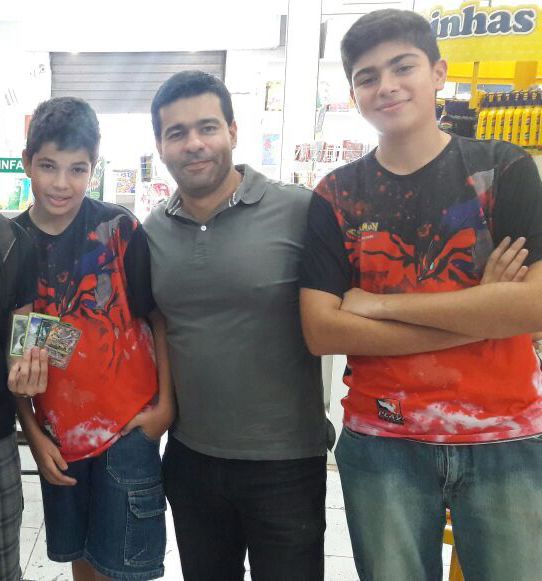
To start, tell me a little about yourself: when did you first hear about Pokémon TCG, and how did the game come into your life?
Tiago Marins:
For those who don't know me, I'm Tiago Marins, I'm 24, a lawyer, and I've been playing Pokémon since I was 12.
I'd known the Pokémon universe since I was very young, seeing cards in toy stores and bookstores here in Belo Horizonte. But the game itself I only got to know at 12. A friend from school traveled to Disney and his younger brother brought back two decks.
At first, I just watched. Then my brother started asking for cards, playing online, and I, curious, went to see what it was about. I ended up starting to play along with him.
Over time, my collection grew and, in 2015, I really got into competitive play. A bookstore near my school ran tournaments every Saturday. My brother and I played all the time, and that ended up catching the shop owner's attention. He talked to my dad about supporting us in bigger tournaments.
From there, we started getting to know the Belo Horizonte competitive scene better, went to UG, and started attending monthlies, regionals, and Saturday tournaments. It was years of playing nonstop and, as an adult, also organizing tournaments.
When you were a kid and started playing, what did Pokémon TCG mean to you back then?
Tiago Marins:
At first, it was just one more of the many games I played with my brother. Then it became a Saturday routine, and later, an escape valve for the problems a teenager can have.
Back then, it was something very special that we shared. It was also the “sport” we practiced to learn to compete, work as a team, and live alongside other people.
Do you remember any defeat that stuck with you at the start? What kept you playing anyway?
Tiago Marins:
I lost so much that I can't even remember a specific defeat that stayed with me.
What I really remember are the people who helped me after the losses. While most people won an easy match and walked away, Alberto and Sonson stayed at the table with me and told me what I could have done better, what I could change in the deck, and that I still had a lot to learn.
Was there a moment when you realized you weren't just learning to play better, but also growing as a person?
Tiago Marins:
Definitely.
The crowd was always older. For a long time, my brother and I were the only kids or teenagers in the mix. Everyone always respected that and saw us as their younger brothers.
Over time, I noticed a very strong emotional growth that I attribute to Pokémon, especially in dealing with frustration and with people. Since we trained together and talked a lot, that contact with older people made me mature as a player, and also gave me direction to mature as a person.
Did your parents or your family play a role in your journey inside Pokémon TCG? How did that support, presence, or encouragement make a difference for you?
Tiago Marins:
I wouldn't be here if it weren't for them.
Every weekend, my dad came with me and my brother to the tournaments. There were card expenses, transport, meals, and, above all, time. He and my mom always supported us, because they knew it was something we loved and also something that helped our development.
I'll never forget my first LAIC. The date fell on my 15th birthday, on April 24, 2017, and I asked for it as a present. My dad drove through the night so my brother and I could play the tournament on Saturday.
After that, at every tournament held in São Paulo through 2019, me, my dad, my mom, and my brother were there. Always with him driving overnight to make it on time. I don't have words to describe how grateful I am to them.
Did Pokémon TCG help you better deal with people different from you? What did the game teach you about respecting, listening, and living alongside others?
Tiago Marins:
Without a doubt.
The way I see childhood and adolescence is that, without hobbies like Pokémon, young people are unlikely to have such close contact with people of such different ages, social classes, and realities.
The worldview I have today comes a lot from the conversations I had with people different from me. The Pokémon community was one of the places where I had that contact the most.
Do you feel that something you learned from Pokémon TCG helped you at school, at work, or in your profession? It could be communication, reasoning, responsibility, focus, or confidence.
Tiago Marins:
Yes.
I've always been a communicative person, and Pokémon amplified that. I made new friends, learned to communicate with different audiences, and developed that social side better.
On top of that, I developed problem-solving reasoning. Combining those two — communication and problem-solving — they're two of the skills I use the most today as a legal professional.
Today, when a kid or a beginner looks at you as a reference, what do you feel you need to deliver beyond just playing well?
Tiago Marins:
Stance and example.
It's a bit wild for me, being who I am, to today be a reference for younger generations. When I see that kids look at me as an example, I have to police my emotions a lot.
Nobody is always at 100%, but when I see my little friends from Junior and Senior, I always try to deliver a smile and an interaction they can take something away from. I find that really beautiful.
That's why I try to carry myself in a cordial way, even when I'm relaxed in my leisure time. I know how much kids can mirror those they see as a reference. So I can't be toxic, I can't trash talk, and most of all, I have an educational duty toward them.
What I try to teach the most is that winning isn't everything and that losing isn't the end of the world. I do that in a simple way: smiling when I'm 3-0, smiling when I'm 0-3, hyping them up when they're 3-0, and supporting them when they're 0-3.
When you think about everything you've experienced because of Pokémon TCG, what might not have happened in your life if the game didn't exist?
Tiago Marins:
I believe that if it weren't for Pokémon, I might still not have traveled on my own to this day.
I also think I'd be less responsible with money, because I learned early on that saving 10 reais during the week meant buying 10 cards on the weekend.
On top of that, there are the friendships Pokémon gave me. Without those friendships and the amount of advice I've received, I might be in a different professional position, with different relationships and different friends.
If you could talk to your kid self, the one who was just starting in Pokémon TCG, what would you say to him today?
Tiago Marins:
First: don't sell the cards when they drop in price, because everything is going to get really expensive in 2026 and you're going to want them all back.
Aside from that tip that could let me retire today, I'd say to have more fun, not to take winning or losing so seriously, and to enjoy the moments more.
I'd also say to welcome more people, not just focus on the game but also on the spirit of community. And, definitely, buy HGSS Energies in 2015.
Conclusion
After listening to Guilherme, Mateus, Jéssica, Michelle, and Tiago, I'm left with the sense that Pokémon TCG shows up in different ways in each of their lives.
For Guilherme, it shows up in the desire to improve, to understand the play, to ask after a defeat, and to try something different next time.
For Mateus, it shows up a lot in the people. In the friends he might not have met outside the game, in his relationship with his mom, in the fun of playing in a group, and in the courage to keep going even when it's awkward or scary to start.
For Jéssica and Michelle, it shows up in another way. They see the game through the routine, through their kids' growth, through the tournaments, the trips, the conversations, and also the hard moments. They aren't just watching a match happen. They're watching their kids grow up inside an environment that has become part of the family.
And Tiago shows another end of this story. He started as a kid, lost a lot, was helped by more experienced people, had family support, and today understands that being a reference isn't just about playing well. It's also about knowing how to act around those just starting out.
I think that's what I wanted to show with this article.
Pokémon TCG isn't going to be the same thing for everyone. For some, it'll be collecting. For others, competition. For others, a weekend hobby.
But when there's a good environment around it, the game can become a place where a kid learns to talk, to lose, to ask for help, to think better, and to feel part of something.
And maybe parents don't need to understand all the cards to take part in this.
Sometimes, just being there already changes a lot.
References
[1] TURKAY, Selen; ADINOLF, Sonam; TIRTHALI, Devayani. Collectible Card Games as Learning Tools. Procedia - Social and Behavioral Sciences, 2012. The article discusses how collectible card games can stimulate creativity, cognition, and logical reasoning, as well as help players synthesize knowledge and develop skills that are hard to teach in the classroom. Available at: ScienceDirect.
[2] ALOTAIBI, Mesfer S. Game-based learning in early childhood education: a systematic review and meta-analysis. Frontiers in Psychology, 2024. The review points to positive effects of game-based learning on cognitive, social, and emotional development, motivation, and engagement in early childhood education. Available at: Frontiers in Psychology.
[3] DELL’ANGELA, Linda et al. Board Games on Emotional Competences for School-Age Children. Games for Health Journal, 2020. The study discusses board games aimed at emotional competences in school-age children and the social/motivational experience during play. Available at: PubMed.