
One of the reasons I came back to the blog in the middle of 2026 was that I missed studying the metagame for real. Watching more matches, following big tournaments, understanding why some decks grow, why others disappear, and trying to look at the competitive scene with a little more calm.
So today I want to talk about the Prague Regional, which happened on April 25 and 26, 2026 and marked the first big tournament of the post-rotation format. And, to be honest, it might have been one of the most anticipated tournaments in a long time. After so many tests, theories, and guesses, we could finally see what was actually working.
I had a bit of a fear of this new format. We came from an environment with , , and several cards that demanded a lot of skill to pilot decks well. In my first post-rotation tests, I have to admit I found the format pretty strange. But after I flipped the switch and accepted that there is no more Iono, everything got clearer. The game changed, and that is fine. Now the idea is to adapt the game plan, understand the new ways to create pressure, and accept that not every deck has to attack the opponent's hand to be strong.
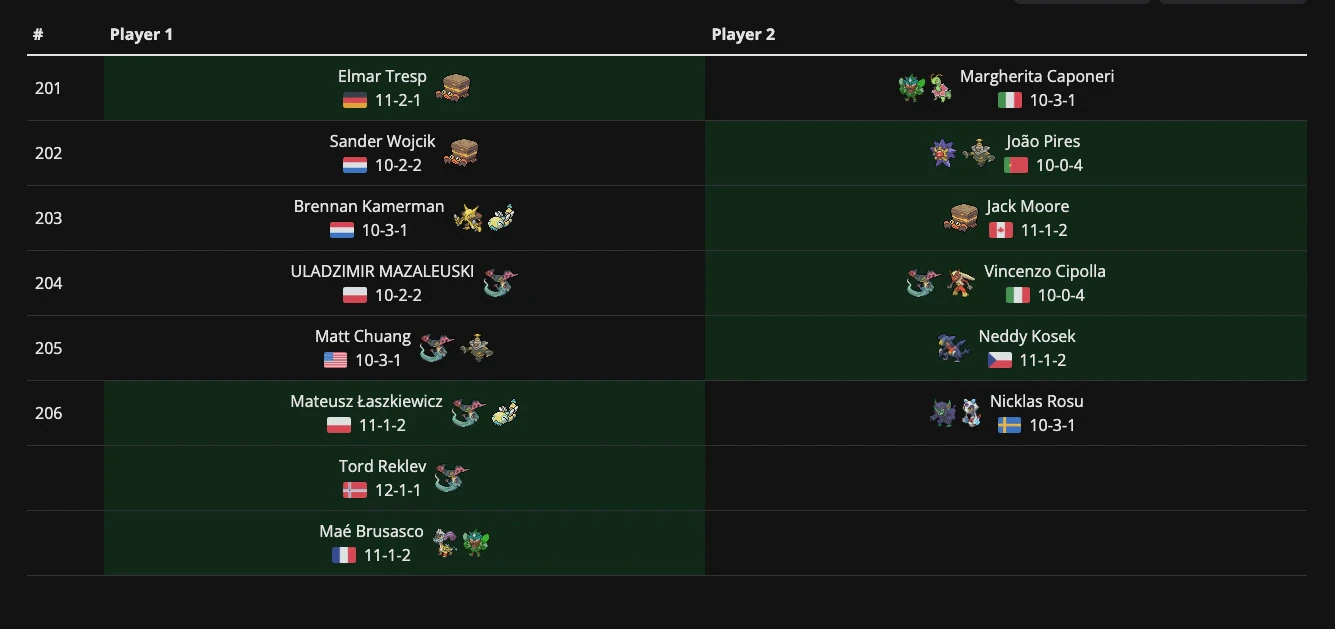
The champion deck itself showed this. The list had no hand disruption, and still won the tournament. That, for me, is one of the most interesting points of Prague: the format may be different, but there is still game, decision, and room for adaptation.
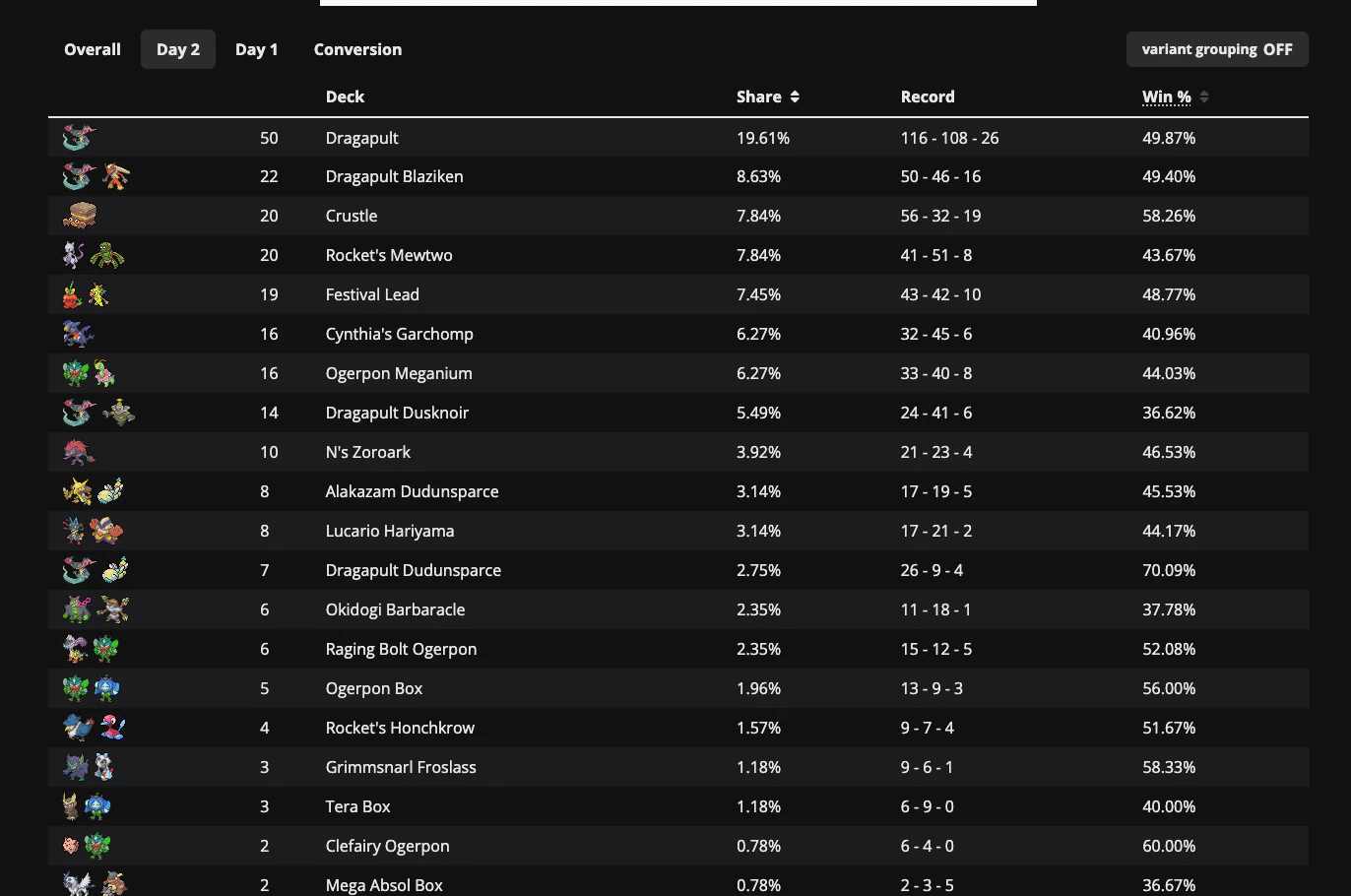
Before the tournament, everyone was already expecting a flood of . And that is exactly what happened. It was the safest deck to start the format with: consistent, strong against a lot of things, and with several different ways to be built. There was also a lot of talk early on about , but it does not seem to have sustained the same hype. Dragapult, on the other hand, showed that even when the meta tries to prepare for it, it still finds different lines to play.
But this article is not going to be just a cold metashare and result analysis.
I want to try to do something a little different. I grew up watching my dad watch Alterosa Esporte. Anyone from Minas probably remembers the discussions between Dudu Galo Doido and Serginho do Cruzeiro. The idea here is to bring a bit of that energy to Pokémon TCG: comment on matches, look at some important decisions, and discuss lines of play without making the text heavy or boring.
I want to make one thing clear from the start: analyzing a decision is not the same as calling someone bad. Decision-making is different from a misplay. Sometimes the player sees a winning line, chooses to follow it, and that does not make them a worse player. On the contrary, that is exactly the kind of choice that makes the game interesting.
So the proposal here is simple: I watched some matches from Prague, took my notes, and I am going to share what I thought at certain moments. It does not mean I am 100% right, nor that the goal is to crucify anyone who played. It is just a way to study the game together, like we were commenting the match side by side.
Day 1 Metagame
Before talking about the matches, I think it is worth looking at the Day 1 metagame first, because it already says a lot about the format.
On the official Pokémon broadcast, the chart already showed what everyone expected: a lot of Dragapult. But there it appeared split by versions. There was Dragapult ex at 15% and Dragapult ex / at 10%.
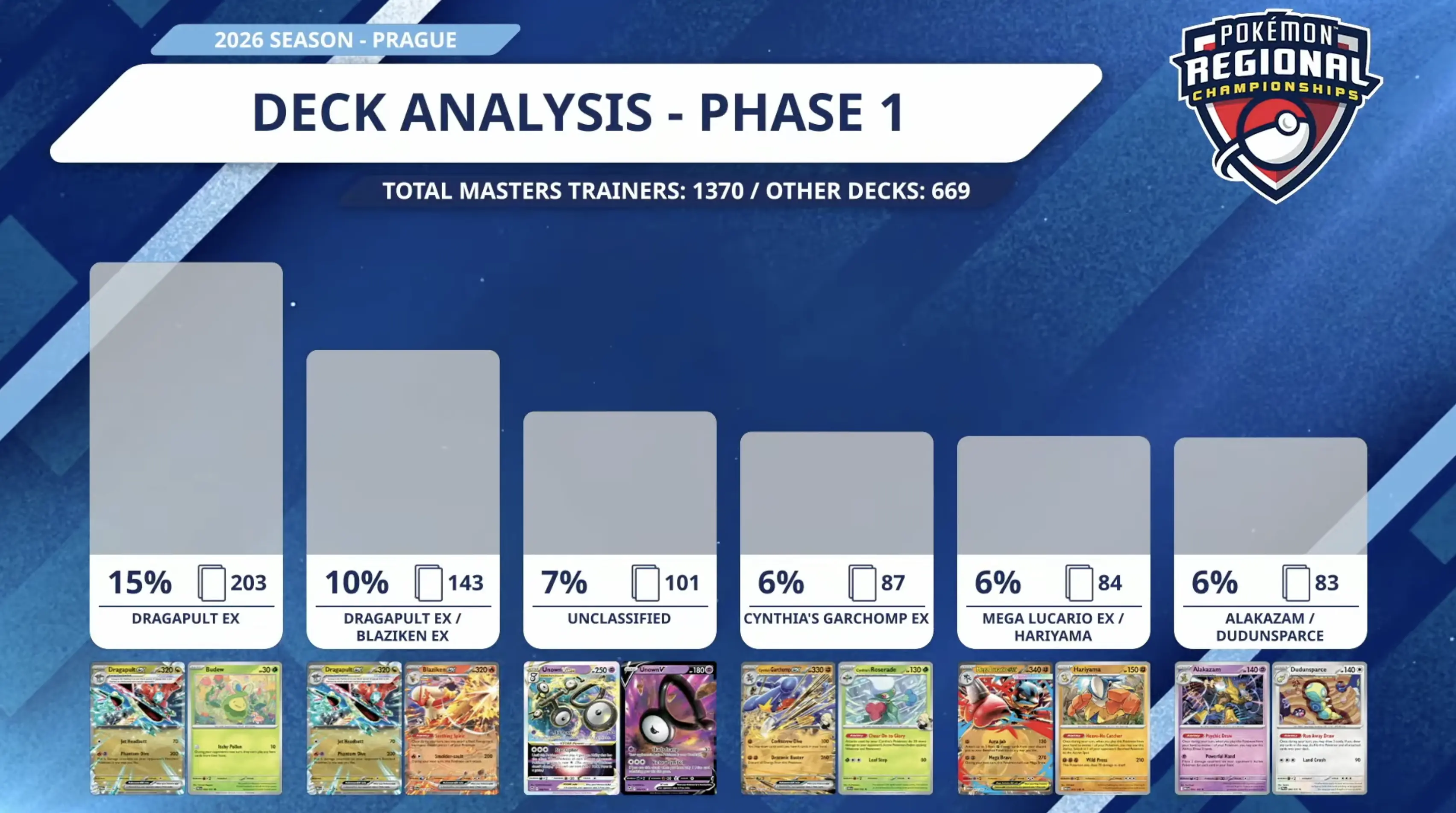
When you look at Limitless with the variants grouped together, the read becomes more direct: Dragapult was 30.58% of Day 1.
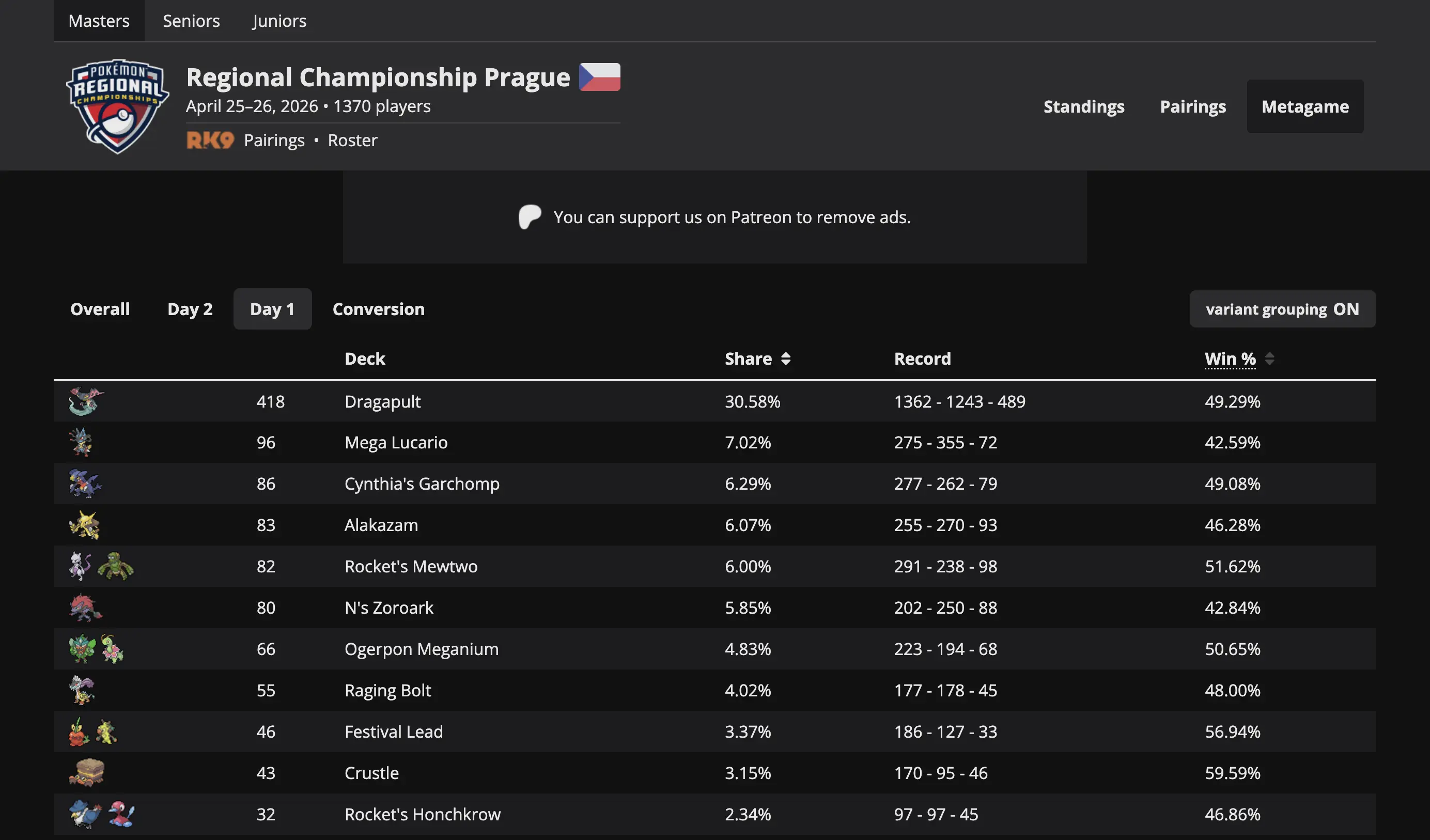
That is a lot.
It was not just the most played deck. It was the deck everyone needed to respect when choosing what to bring to Prague. If you were not playing Dragapult, you needed at least a minimally decent answer for it.
And, honestly, that did not surprise me much. Dragapult really did look like the safest deck to start the format with. It is consistent, hits well, spreads damage, has several possible versions, and does not die easy just because the meta tries to target it.
Mega Lucario, at 7.02%, and , at 6.07%, also made sense to me. Both had been talked about a lot before the tournament and were natural choices for the start of a format, especially when a lot of people were still trying to figure out what was real and what was just hype.
What surprised me the most was being the third most played deck, with 6.29%. I expected to see the deck in Prague, of course, but not that high. Maybe a lot of people saw it as a good way to face Dragapult, or at least an option that did not get too lost in this early meta.
In the end, Day 1 left a pretty clear first read: the format started spinning around Dragapult. The rest of the tournament was going to show whether that choice was just safety for the start of the format or whether the deck really was a step above the others.