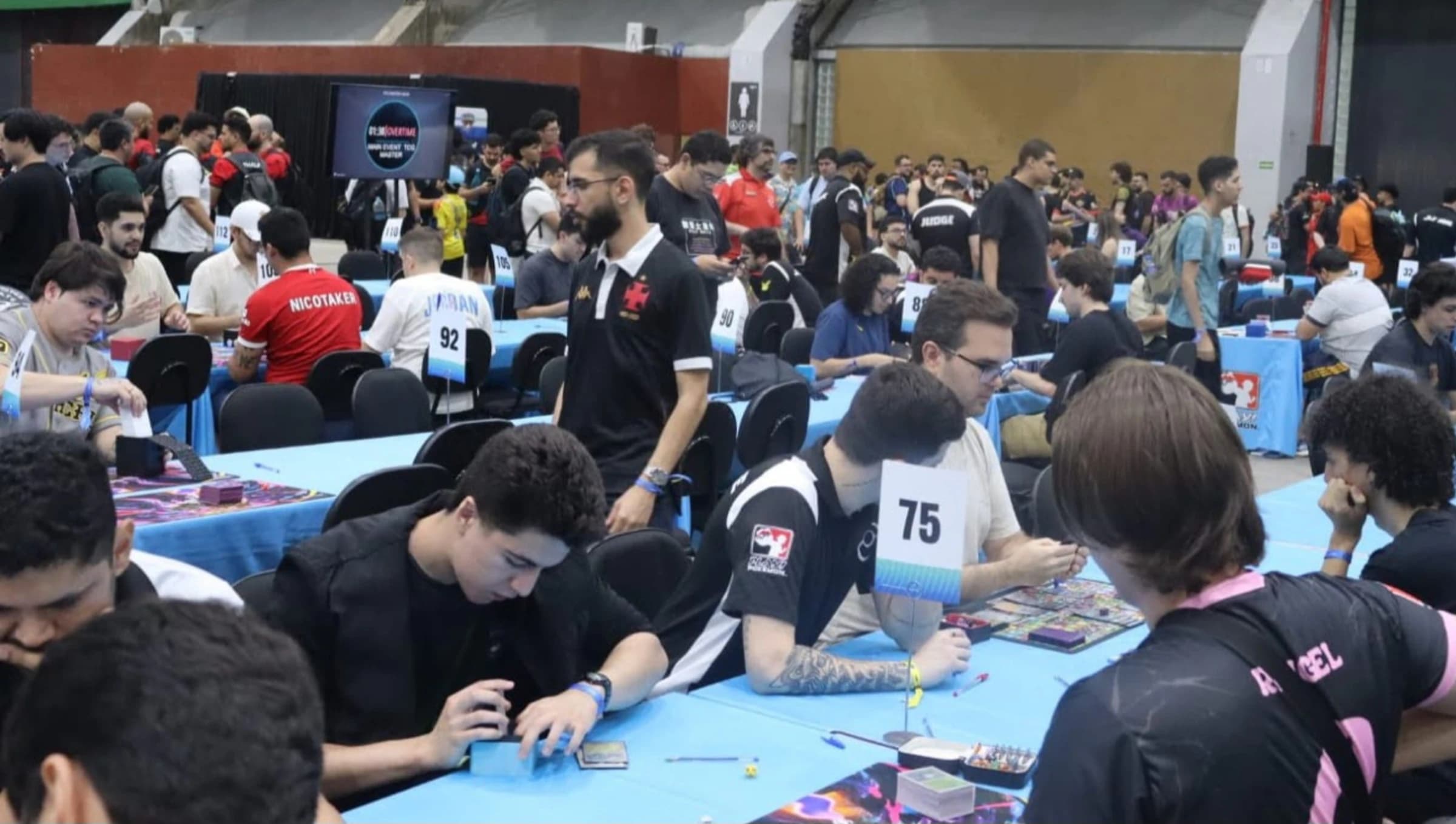
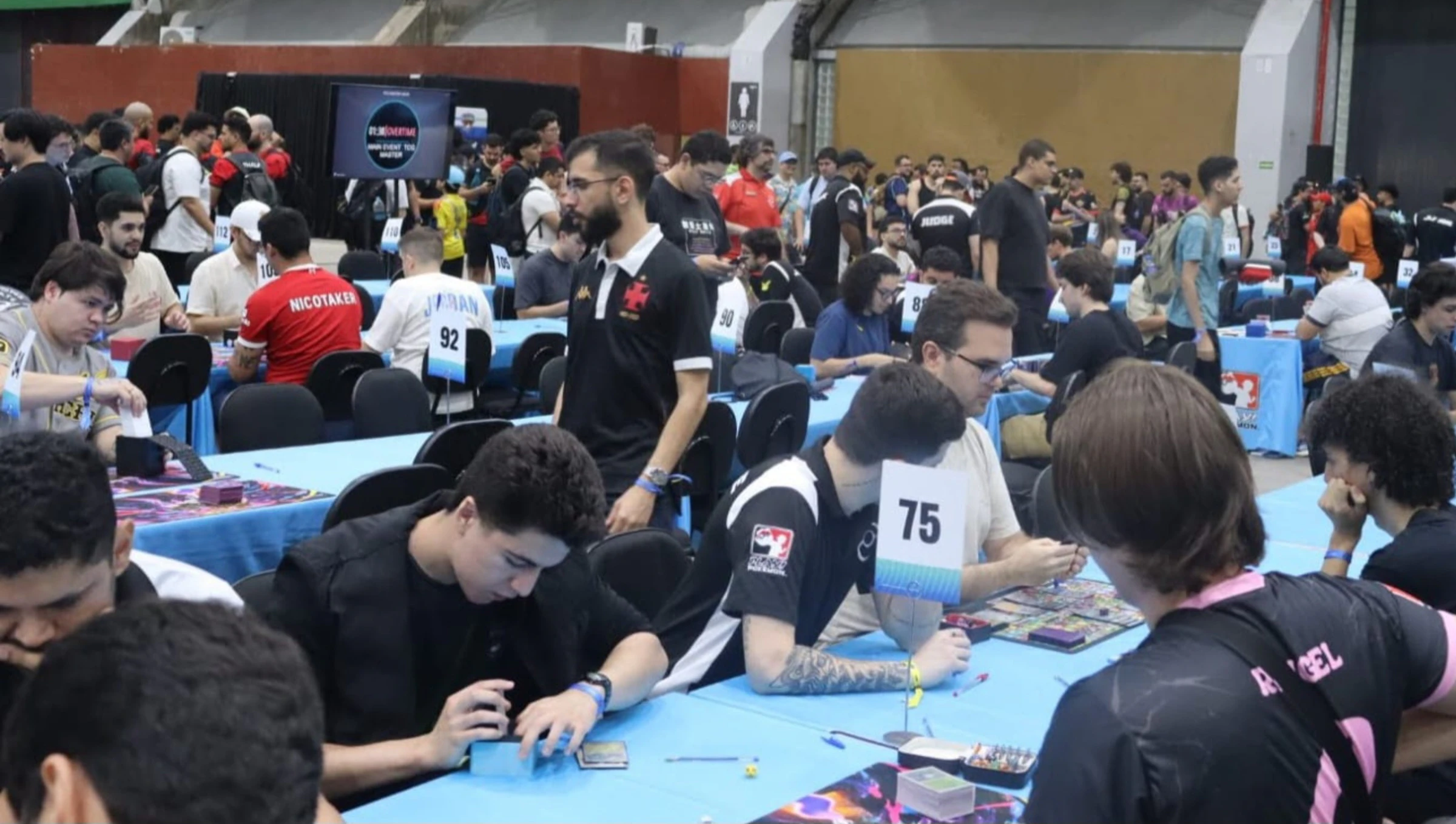
Hey everyone, José Iuri here, and in this article I want to tell you how my Recife Regional went.
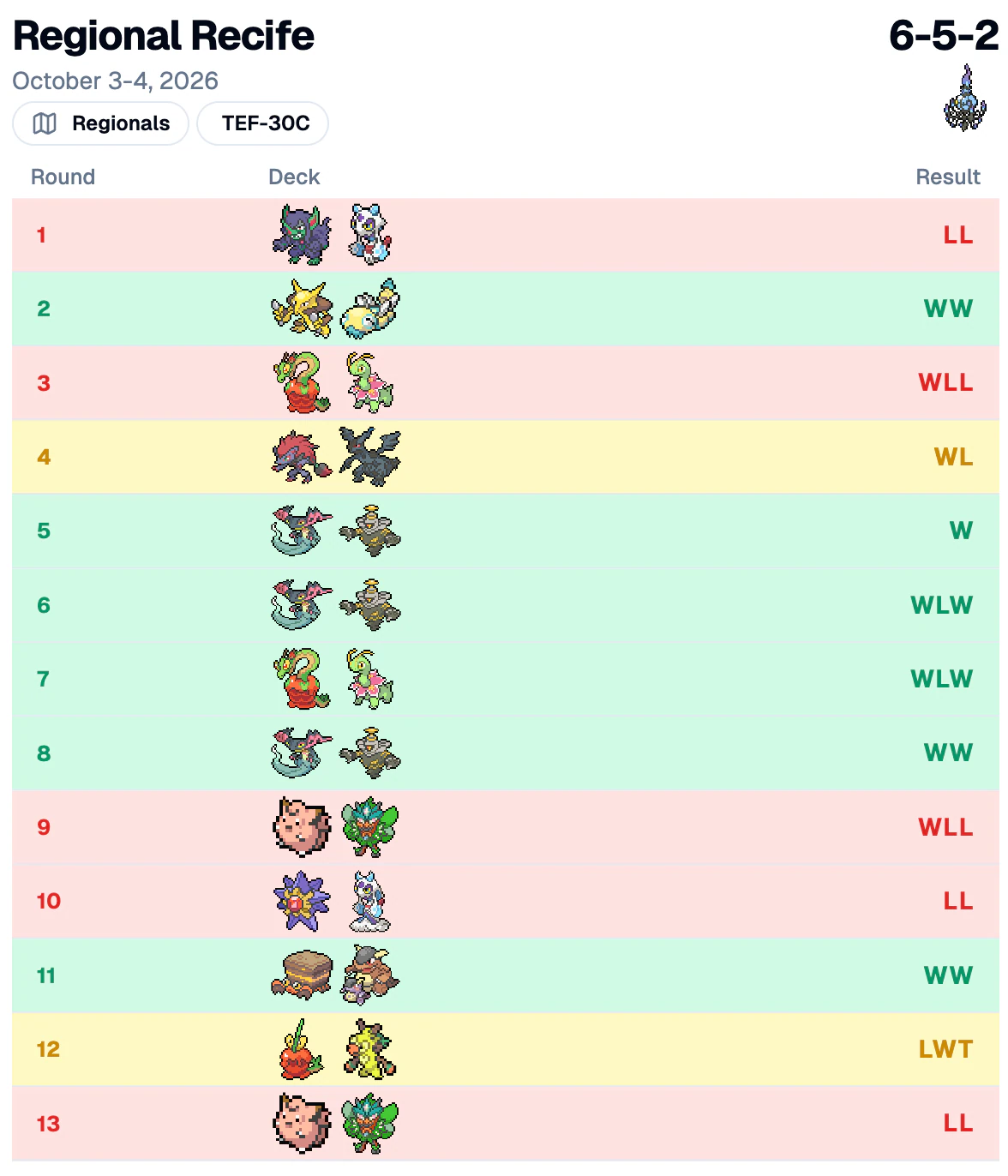
I finished 176th out of 1074 players, playing Mega Chandelure ex, at the Recife Regional last weekend (October 3 and 4). For me it was a decent result. I made Day 2, but I expected to go further. I'll show the decklist further down and you'll see why I picked this deck, how I prepared, the moments that decided the tournament and what I think this regional says about the format.
Why I picked Mega Chandelure ex
Anyone who follows me knows I'm a Control player. Last season I played pretty much everything with Pidgeot Control, with two exceptions: in Curitiba I took Zoroark and in Campinas, Dragapult. Control is the kind of deck I like and have fun playing, and I've always felt the surprise factor helps a lot at a big tournament.
When I started thinking about Recife, my mind was already made up: I was going to bring a Control deck. What made me pick Mega Chandelure ex was confidence. I felt good against Dragapult and all of its sub-variants, which is unquestionably the best deck in the format, and I still had solid plans against Alakazam, Festival Grounds, Mega Excadrill and the other decks I expected to face.
The difference in my preparation was that I practiced alone. My closest testing partners, Álvaro Miguelino and Tiago Marins, had made up their minds to play Zoroark or Dragapult, so it didn't make sense for us to test together. In September I used the ladder as my main tool to polish the list and test the matchups.
It was a great choice. Playing a lot of games a day, I could face a wide variety of decks and see in practice what worked and what didn't in my list. Besides being a testing ground, the ladder also backed up my confidence: I was getting good Elo ratings with the deck and peaked at 1890. That gave me the assurance that Mega Chandelure ex wasn't just a nice idea on paper and that it could really compete in the format. I got to Recife confident in the deck and in the game plan.
The decklist
Like other reports, I won't go card by card. I'll talk about the choices that matter most and why. The full list is at the end of this section.
The Chandelure line
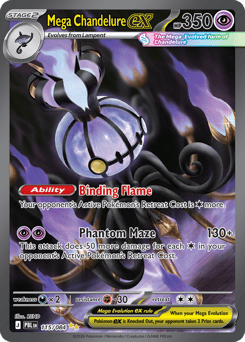
The cornerstone of the deck, and the concept that makes everything work, is . The reason is its Ability Binding Flame: the Retreat Cost of my opponent's Active Pokémon goes up by one for each Mega Chandelure ex I have in play. The more copies I put down, the more expensive it gets for my opponent to get out of the Active Spot.
In practice, the Pokémon stuck in the Active Spot simply don't retreat, or my opponent spends a huge amount of resources to make it happen. And those resources, for most decks, are essential: Energy, Trainer cards and turns they needed to set up their own strategy. Every forced retreat is a turn where my opponent isn't doing what their deck was built to do. That's how I lock my opponent and control the pace of the game.
Baby Chandelure and Alluring Light
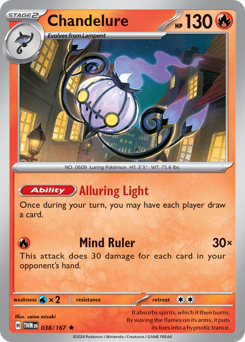
Besides the Mega, I played 4 copies of baby , and this is where the deck gets more interesting. Its Ability Alluring Light makes both me and my opponent draw a card. At first glance it seems counterintuitive to hand my opponent resources, but it works in my favor in two ways:
It speeds up my win condition. Every extra card my opponent draws brings them closer to the end of their deck, so Alluring Light shortens the road to a deck-out win in long games.
It powers my attack. Mind Ruler does 30 damage for each card in my opponent's hand. The more cards they hold, the harder I hit: with 11 cards in their hand, the attack reaches 330 damage. In other words, the resource I hand over is exactly what creates a real Knock Out threat against high-HP Pokémon.
The result is that my opponent ends up in a bad spot either way. If they hold on to cards, they take more damage. If they dump everything to shrink their hand, they spend resources they might have needed later, and they're still stuck in the Active Spot with an expensive retreat.
Lampent and Spreading Light
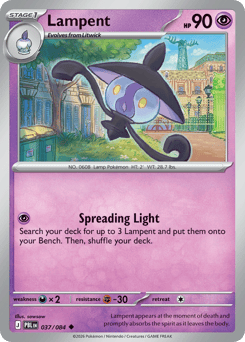
The piece that ties the whole line together is , and the reason is its attack Spreading Light: it puts up to 3 more Lampent straight onto my Bench. That lets me build the core of the deck all at once, without having to evolve each one from Litwick.
The real gain is space. Since Spreading Light gives me several Lampent at once, I can have both Chandelure and Mega Chandelure ex in play at the same time, without them fighting over Bench slots. Each one does its own job: the Mega locks my opponent's Active Pokémon with Binding Flame, and Chandelure pulls resources with Alluring Light and threatens the Knock Out with Mind Ruler.
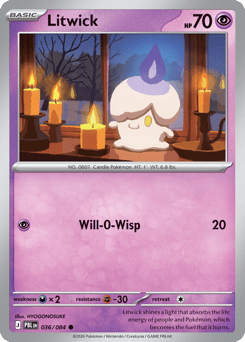
In total, the main line ended up at 4 Litwick, 4 Lampent, 4 Chandelure and 3 Mega Chandelure ex. That's 15 cards devoted to a single evolution family, which shows how much the deck revolves around it.
The other control pieces
Beyond the Chandelure line, the deck runs a set of cards that close off my opponent's outs. The idea is simple: there's no point locking the Active Pokémon if my opponent has a way around it.
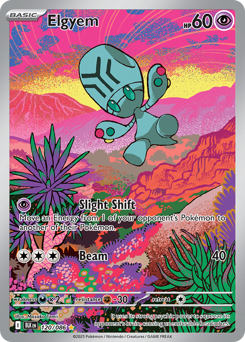
: moves Energy from one Pokémon to another. I used it to make sure my opponent's Active Pokémon never got powered up, leaving it stuck and unable to attack.
: brings a Pokémon from my opponent's Bench into the Active Spot. That lets me lock another Pokémon with no resources, and my opponent has a new problem to deal with while the retreat stays expensive.
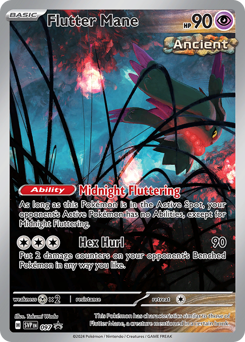
: shuts off Abilities my opponent would use to recover or speed up their strategy, like those of and .
: made sure the line couldn't vanish from play, stopping my opponent's Dusknoir from Knocking itself Out to use its effect. That took away a very common play in decks like Dragapult.
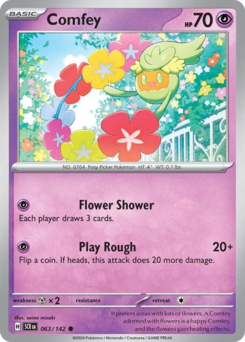
: makes both me and my opponent draw 3 cards, speeding up the game. This was especially useful against , because it doesn't recycle its hand. With every extra draw, their deck ran out faster, and I could win by deck out before they took their 6 Prize cards.
Together, these cards turn Binding Flame from a standalone Ability into a complete system: my opponent is stuck, can't attach Energy, can't use the attacks they rely on and also loses the outs they would normally have.
Consistency: Hilda and Telepathic Psychic Energy
A deck with an evolution line as big as mine needs consistency, and mine came from a two-card combo.
The first one is , who searches for whatever evolution is missing each turn, be it Lampent, Chandelure or Mega Chandelure ex, and also brings along . A single card covered two needs of the turn: the evolution and the Energy.
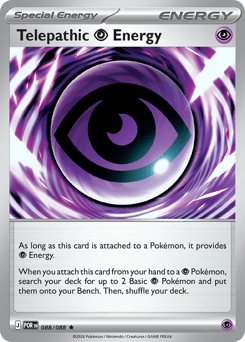
The second one is Telepathic Psychic Energy itself, which works so well because most of my Basic Pokémon are Psychic type. When I attach it from my hand to a Psychic Pokémon, it puts up to 2 Basic Psychic Pokémon from my deck straight onto my Bench, and that let me set up the core of the deck almost effortlessly.
Together, the two kept the engine running: Hilda brought the evolution and the Energy, and Telepathic Psychic Energy spread the Basics across the Bench, leaving everything ready for Lampent and Spreading Light.